Pear Shaped Lab Grown Diamonds
A pear shaped lab grown diamond combines the rounded curve of an oval with the single point of a marquise, creating a teardrop shape that can be worn point up or point down. Its elongated outline makes the finger look longer, and the shape often appears larger than a round diamond of the same carat weight.
Choose from over 49,000 lab grown pear shaped diamonds, each independently certified by GIA or IGI. Beyond certification, every stone we recommend is personally checked by our Hatton Garden team, we look closely at symmetry to make sure the point sits centred and both sides mirror each other exactly, something a certificate alone won’t always tell you. Use our filters to search by carat, colour, clarity and cut, so you can compare stones side by side and find the one that’s right for you.
Read morecarat
price
color
cut
clarity
polish
symm.
flour.
certificate
depth
table
L:W Ratio
Personalise jewellery using pear cut lab diamonds
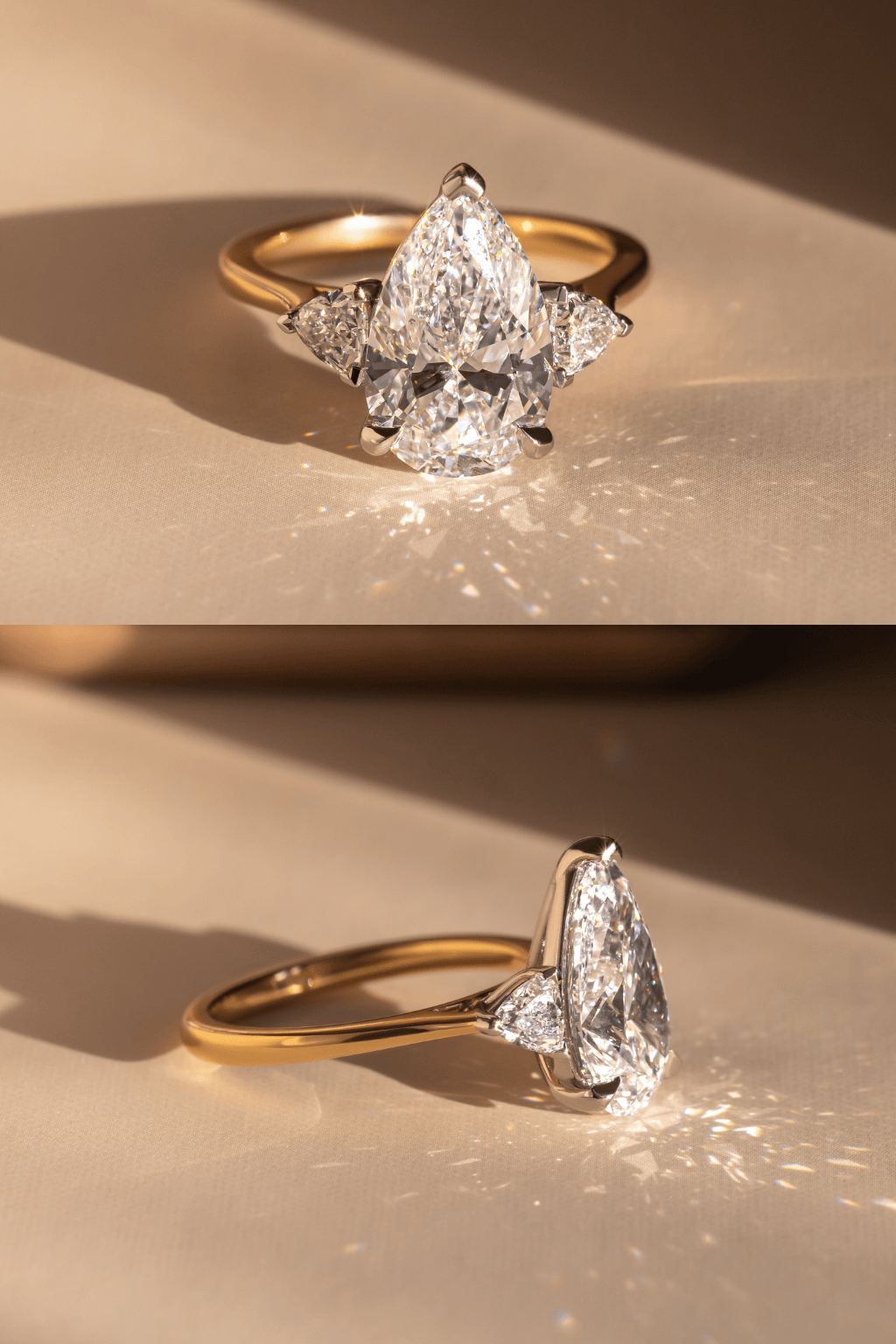
Personalise jewellery using pear cut lab diamonds
Personalise your jewellery with stunning pear cut lab created diamonds, crafted to reflect your unique style. From custom designs to expert guidance, book an appointment today and create a piece that’s truly yours.
Flawless designers can guide you at every step
Why Choose Pear Cut Lab Diamonds?
Pear cut lab grown diamonds are chosen for their distinctive teardrop shape that blends brilliance with individuality. This cut creates the illusion of length, making fingers look more slender when set in engagement rings. Lab created diamonds also provide the same sparkle as mined ones while being eco-friendly and budget-conscious.
Design Inspirations with Pear shaped Lab Diamonds
Pear cut lab grown diamonds can be styled in solitaire rings, halo settings, or side-stone designs to highlight their striking shape. They also look stunning in pendants and drop earrings, where the teardrop form adds extra brilliance. Whether set vertically or at an angle, pear cuts bring a modern twist to classic jewellery pieces.
Pear Shaped Lab Diamond - FAQs
What makes a pear cut lab diamond different from other shapes?
What makes a pear cut lab diamond different from other shapes?
Pear cut lab diamonds feature a teardrop design that blends the sparkle of a round cut with the elegance of a marquise.
How should I wear a pear cut lab diamond ring?
How should I wear a pear cut lab diamond ring?
Most wear the pointed end facing the fingertip, but it can also be set upward for a modern, unique look.
Do pear cut lab diamonds show color differently?
Do pear cut lab diamonds show color differently?
Yes, the tip of a pear cut can reveal more color, so many buyers choose a higher color grade for a brighter appearance.
Does a pear shape diamond have any symbolic meaning?
Does a pear shape diamond have any symbolic meaning?
It’s often linked to tears of joy, thanks to its teardrop silhouette, and to individuality, since it’s one of the more distinctive diamond shapes available. The cut itself dates back to the 15th century, making it one of the older diamond shapes still popular today.
What setting works best for a pear shape diamond?
What setting works best for a pear shape diamond?
Prong settings, especially with a V-tip prong to protect the point, are the most common. Halo settings are also popular, as they add extra sparkle and make the stone look larger.
Why does a pear shape diamond need good symmetry?
Why does a pear shape diamond need good symmetry?
Any unevenness, especially at the point or along the curved edge, is easy to spot with the naked eye. It’s one of the first things our Hatton Garden team checks on every pear shape diamond before it’s added to our collection.
Does a pear shape diamond hide flaws well?
Does a pear shape diamond hide flaws well?
It depends on the flaw’s position, the point and centre of the stone show inclusions more easily than the rounded end. This is exactly what our team checks for before we recommend a stone to you.
What is the ideal length-to-width ratio for a pear shape diamond?
What is the ideal length-to-width ratio for a pear shape diamond?
Most jewellers recommend a ratio between 1.45 and 1.75 for a balanced, classic teardrop shape. Our Flawless team can help you compare ratios in person if you’re unsure what looks best.
Does a pear shape diamond look bigger than its carat weight suggests?
Does a pear shape diamond look bigger than its carat weight suggests?
Often, yes. Its elongated shape gives it more visible surface area, so it can look larger on the hand than a round diamond of the same carat weight, something worth considering when comparing stones in our collection.
Is the point of a pear shape diamond more likely to chip?
Is the point of a pear shape diamond more likely to chip?
The point is the most delicate part of the stone, so we recommend a protective V-tip prong when setting a pear shape diamond, something our team factors in with every custom design.
Need help choosing ?
We're happy to help