Heart Shaped Lab Grown Diamonds
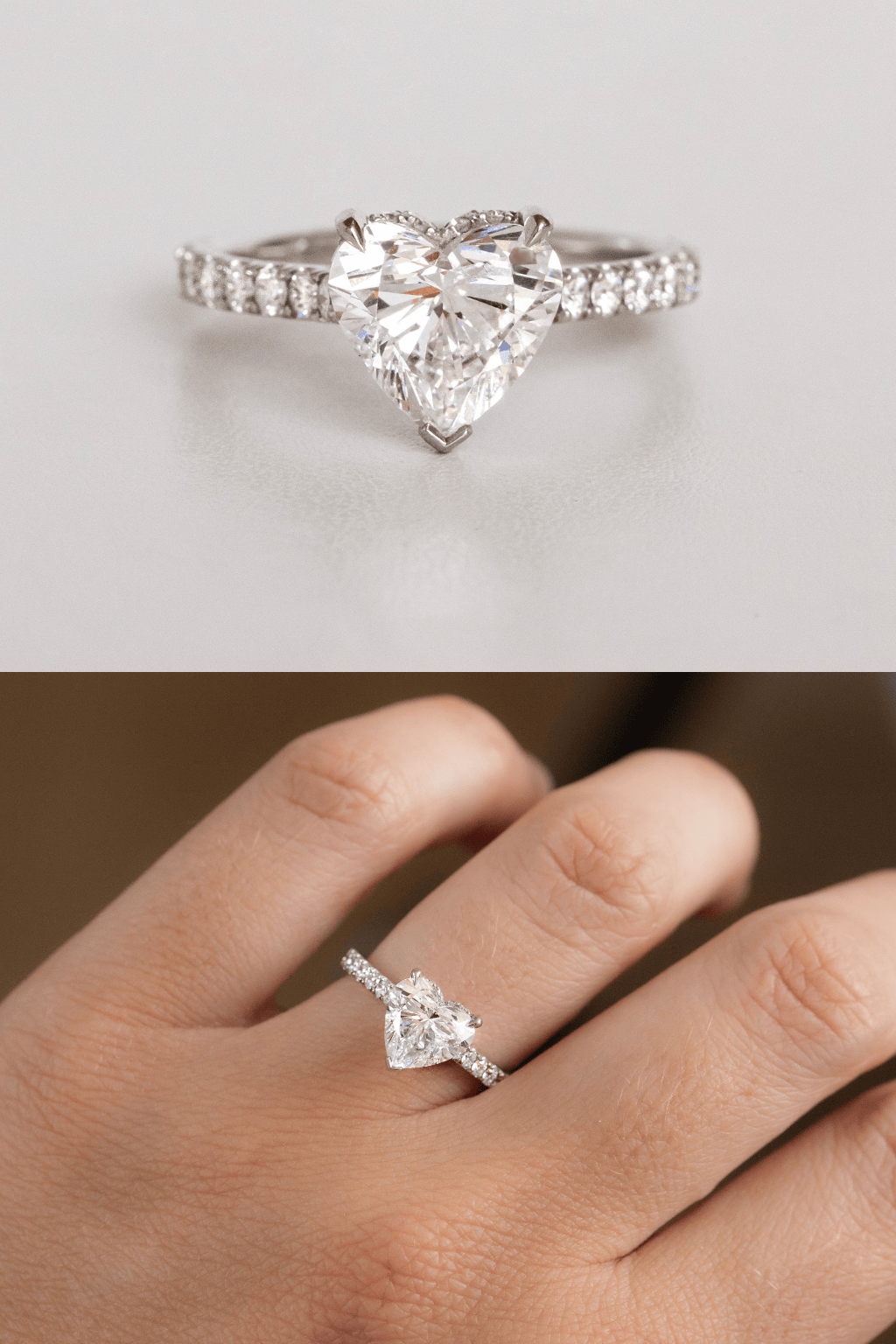
Heart shaped lab grown diamonds combine a rounded top with a distinct central cleft and tapered point, making symmetry and cut precision more critical to their appearance than in most other fancy shapes. Choose from our selection of loose lab-grown heart shaped diamonds, each personally assessed for lobe symmetry, cleft definition and point alignment, as even small inconsistencies are more visible in a heart cut than in rounder shapes. Our experience with fancy-shaped diamonds, based in Hatton Garden, helps customers compare cut, proportions and clarity with confidence when choosing a heart shaped lab-grown diamond for their engagement ring or bespoke jewellery.
Read morecarat
price
color
cut
clarity
polish
symm.
flour.
certificate
depth
table
L:W Ratio
Book a Hatton Garden or Manchester showroom consultation
Book a Hatton Garden or Manchester showroom consultation
Express your deepest feelings with a heart shaped lab created diamond, designed to radiate beauty and meaning. Book an appointment with our experts to discover bespoke creations that reflect your unique story.
We can help you design something unique for your gift
The Art of Cutting a Heart Shaped Lab Grown Diamond
When choosing a heart cut lab grown diamond, outline symmetry is one of the most important factors — the two lobes should be even, with a well-defined cleft and a straight, centred point. Proportions also affect how balanced the shape appears face-up, while cut quality influences brightness and fire more than in rounder shapes. Alongside these, carat weight, colour, and clarity remain key considerations, as they do with any diamond purchase.
Heart Lab Diamonds in Different Jewellery Styles
Heart shaped lab grown diamonds suit a range of jewellery styles beyond the classic engagement ring setting. In pendants and earrings, the shape’s distinct outline works well as a solitaire, allowing the cut and proportions to stand out on their own. In rings, it pairs well with pavé bands, halo settings, or side stones, which can enhance symmetry and add extra brilliance around the centre stone. When choosing a heart shaped lab-grown diamond for a specific setting, factors like carat weight and outline proportions matter most, as they determine how the shape reads within the design. Our range makes it easy to select a stone suited to the style and setting you have in mind.
Heart Cut Lab Grown Diamonds - FAQs
What is a heart shaped lab grown diamond?
What is a heart shaped lab grown diamond?
A heart shaped lab grown diamond is a fancy cut diamond featuring a rounded top, a central cleft, and a tapered point, created in a controlled laboratory environment rather than mined from the earth. It shares the same optical and physical properties as a natural diamond of the same shape.
How do I know if a heart diamond has good proportions?
How do I know if a heart diamond has good proportions?
Look for a length-to-width ratio between 0.90 and 1.10, along with symmetrical lobes and a sharp, well-cut cleft for the most balanced appearance.
Which jewellery styles suit heart shaped lab diamonds best?
Which jewellery styles suit heart shaped lab diamonds best?
Heart cuts are popular in solitaires, pendants, and halo designs. They are also chosen for anniversary and milestone gifts, making them versatile for both romantic and statement jewellery.
What should I look for when choosing a heart shaped diamond?
What should I look for when choosing a heart shaped diamond?
Symmetry is one of the most important factors, as the two lobes should be even and the point should align with the centre of the cleft. Cut quality, proportions, colour, clarity, and carat weight are also worth considering, as they affect how the diamond appears once set.
Can I use a heart shaped lab grown diamond for jewellery other than engagement rings?
Can I use a heart shaped lab grown diamond for jewellery other than engagement rings?
Yes, heart shaped lab grown diamonds are also used in pendants, earrings, and other fine jewellery pieces, where the shape can be set as a solitaire or combined with side stones.
What clarity grade is recommended for a heart shaped lab grown diamond?
What clarity grade is recommended for a heart shaped lab grown diamond?
Because heart shaped diamonds have larger open facets near the centre and point, inclusions can be more visible than in shapes with more facets, such as round brilliants. Choosing a clarity grade with fewer visible inclusions in these areas is worth prioritising.
How should the point of a heart shaped diamond be protected in a setting?
How should the point of a heart shaped diamond be protected in a setting?
The point is the most vulnerable part of the diamond and is typically protected with a V-shaped prong or a securely positioned claw. This is worth checking when choosing a setting, regardless of the diamond’s specifications.
What information is provided with each heart shaped lab grown diamond?
What information is provided with each heart shaped lab grown diamond?
Each loose heart shaped lab-grown diamond in our range includes certification and grading details, so you can review its specifications before making a decision.
Where is the best place to buy a heart shaped lab grown diamond?
Where is the best place to buy a heart shaped lab grown diamond?
The best place to buy a heart shaped lab grown diamond is one that offers a wide range of specifications, clear certification details, and guidance on factors specific to this shape, such as symmetry and proportions. As Flawless, based in Hatton Garden, we assess each heart shaped lab-grown diamond closely and help customers compare options so they can choose a stone suited to their engagement ring or fine jewellery design.

Need help choosing ?
We're happy to help