Emerald Cut Lab Grown Diamonds
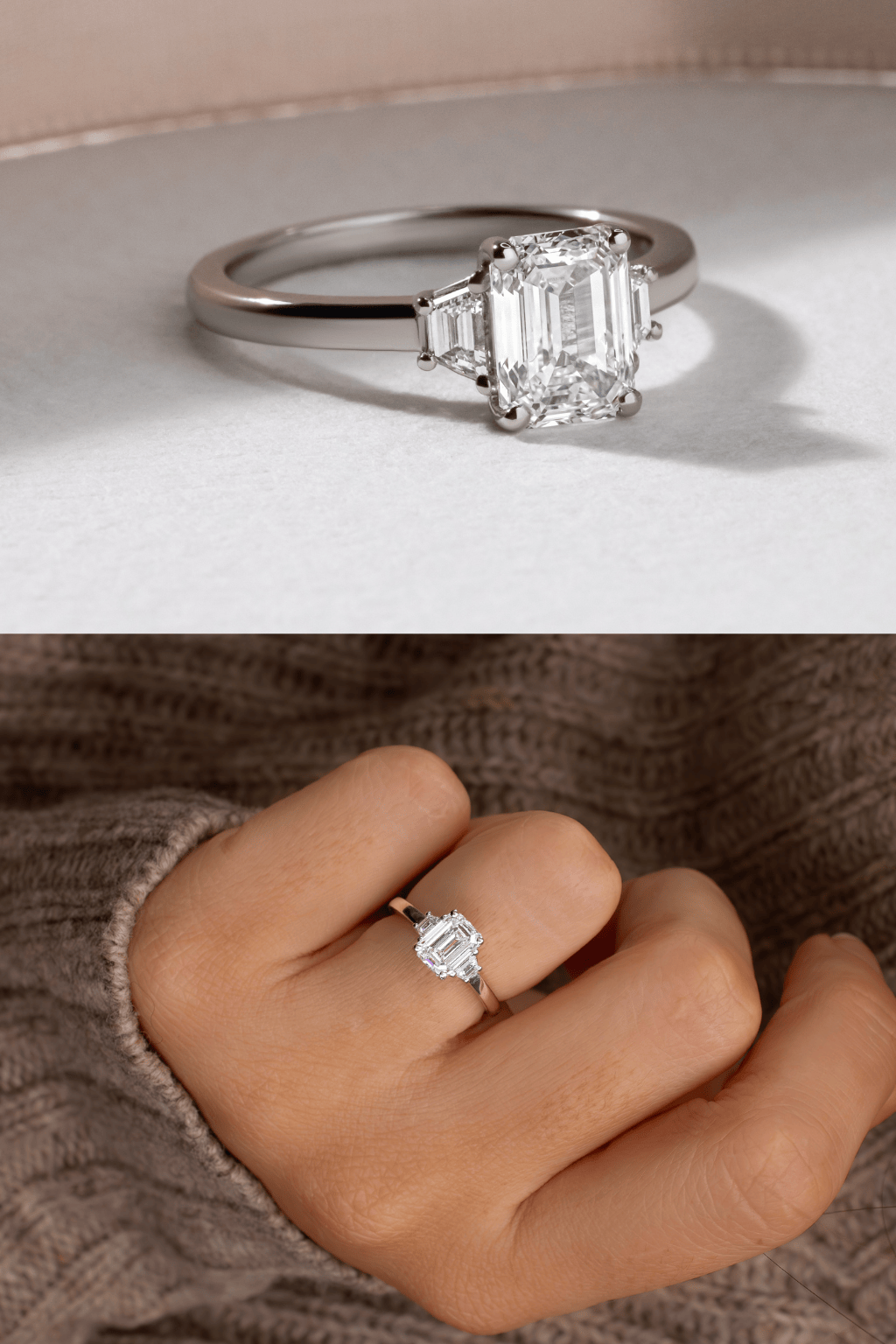
Emerald cut lab grown diamonds work differently from a brilliant cut, using long, open step facets and a broad table that let you see straight into the stone rather than scattered sparkle. With an emerald cut, clarity is more visible than in almost any other shape. It’s the first thing our Hatton Garden team checks on every loose stone we consider, along with how evenly the step facets are spaced and how crisp the corners are cut. All stones are independently certified by GIA or IGI, so carat, colour and clarity are always verified.
Whether you prefer a longer, more elongated shape or one closer to square, we’ve curated a wide range of carat weights and colour grades to suit every budget and style. Once you’ve chosen your stone, we can set it into a ring designed entirely around it.
Read morecarat
price
color
cut
clarity
polish
symm.
flour.
certificate
depth
table
L:W Ratio
Book a Hatton Garden or Manchester showroom consultation
Book a Hatton Garden or Manchester showroom consultation
Add a unique touch with an emerald cut lab grown diamond, crafted to celebrate individuality and meaning. Create a one-of-a-kind piece that tells your story. Book an appointment with our experts to explore custom designs and transform your vision into a lasting treasure.
Flawless designers are there to help at every step of the design
History and Appeal of the Emerald Cut Lab Diamonds
The emerald cut traces its origins back to the 1500s, originally used by gem cutters to enhance the beauty of emeralds. Over time, its refined step-cut style was adopted for diamonds, creating a sophisticated look admired for centuries. Today, lab grown emerald cut diamonds bring the same iconic appeal with a modern, sustainable twist. Their clean lines and elegant symmetry make them a favorite for those seeking a bold yet classic statement.
Best Colour Grades for Emerald Cut Lab Diamonds
Emerald cut lab grown diamonds showcase their beauty best in near-colourless to colourless grades, typically ranging from D to H on the GIA scale. Because the step-cut facets emphasise clarity and transparency, even slight colour can be more noticeable compared to brilliant cuts. Choosing higher colour grades enhances the crisp, bright appearance that buyers love in emerald cuts. For those seeking a warmer tone, lower grades can also pair beautifully with yellow or rose gold settings.
Emerald Cut Lab Created Diamonds - FAQs
Why do emerald cut diamonds need higher clarity?
Why do emerald cut diamonds need higher clarity?
The step-cut faceting of emerald diamonds creates a “hall-of-mirrors” effect that highlights transparency. This makes inclusions or blemishes easier to spot, so a higher clarity grade is often recommended.
What is the best length-to-width ratio for an emerald cut diamond?
What is the best length-to-width ratio for an emerald cut diamond?
Most people prefer a ratio between 1.3 and 1.6. A longer ratio elongates the finger, while a shorter, closer-to-square stone looks bolder. Our team can help you compare ratios in person before you decide.
Which settings look best with emerald cut lab grown diamonds?
Which settings look best with emerald cut lab grown diamonds?
Emerald cuts pair beautifully with solitaires, three stone rings, halo settings, and east-west designs. These styles highlight the clean lines and bold presence of the cut.
What is the "hall of mirrors" effect in an emerald shaped diamond?
What is the "hall of mirrors" effect in an emerald shaped diamond?
It’s the reflective, mirror-like pattern created by the step-cut facets as light bounces between them. A well-cut stone shows this clearly, which is one of the first things our team looks for.
Do emerald cut diamonds chip easily at the corners?
Do emerald cut diamonds chip easily at the corners?
The corners are the most vulnerable part of the stone, especially if the girdle is cut too thin. Our team checks girdle thickness on every step cut diamond to help avoid this.
What cut grade should I look for in an emerald cut lab grown diamond?
What cut grade should I look for in an emerald cut lab grown diamond?
Excellent or Very Good is generally recommended, since precision cutting is what creates the sharp hall-of-mirrors effect this shape is known for.
What colour grade works best for an emerald cut diamond?
What colour grade works best for an emerald cut diamond?
Because the open facets show colour more clearly, many buyers choose G or above for a brighter look. Our team can show you a few grades side by side to help you compare.
Does an emerald cut diamond look bigger than its carat weight suggests?
Does an emerald cut diamond look bigger than its carat weight suggests?
It can, its broad table and elongated shape often make it appear larger on the hand than a round diamond of the same carat weight.
Are lab grown emerald cut diamonds the same as natural ones?
Are lab grown emerald cut diamonds the same as natural ones?
Yes, chemically, physically and optically. Every stone we offer is independently certified by GIA or IGI, so you know exactly what you’re getting.
Can an emerald cut lab grown diamond be resized later?
Can an emerald cut lab grown diamond be resized later?
Yes, though because of its rectangular shape, resizing is best done by a jeweller experienced with step cuts, to keep the proportions and prong alignment correct. Our Hatton Garden team can handle this for you.
How do I clean an emerald cut diamond ring?
How do I clean an emerald cut diamond ring?
A soft brush with warm water and mild soap works well, the open facets can show dust or oil more easily than other cuts, so regular cleaning helps keep the sparkle visible.

Need help choosing ?
We're happy to help