13 May 2026 — by Flawless Fine Jewellery — Reading time 3 minutes
The Expert Guide to Engagement Ring Styles
The Expert Guide to Engagement Ring Styles
An engagement ring is the ultimate expression of love. It’s intimate, intentional, and exquisitely personal.
But behind every beautiful ring lies a series of thoughtful decisions. How do you choose a design that truly reflects your partner’s style? Which setting will best honour the natural beauty of the stone? And how do you make sure the ring will stand the test of time, both aesthetically and practically?
For many couples, an engagement ring is their first step into the world of fine jewellery, so it’s only natural to feel a little overwhelmed by all the possibilities.
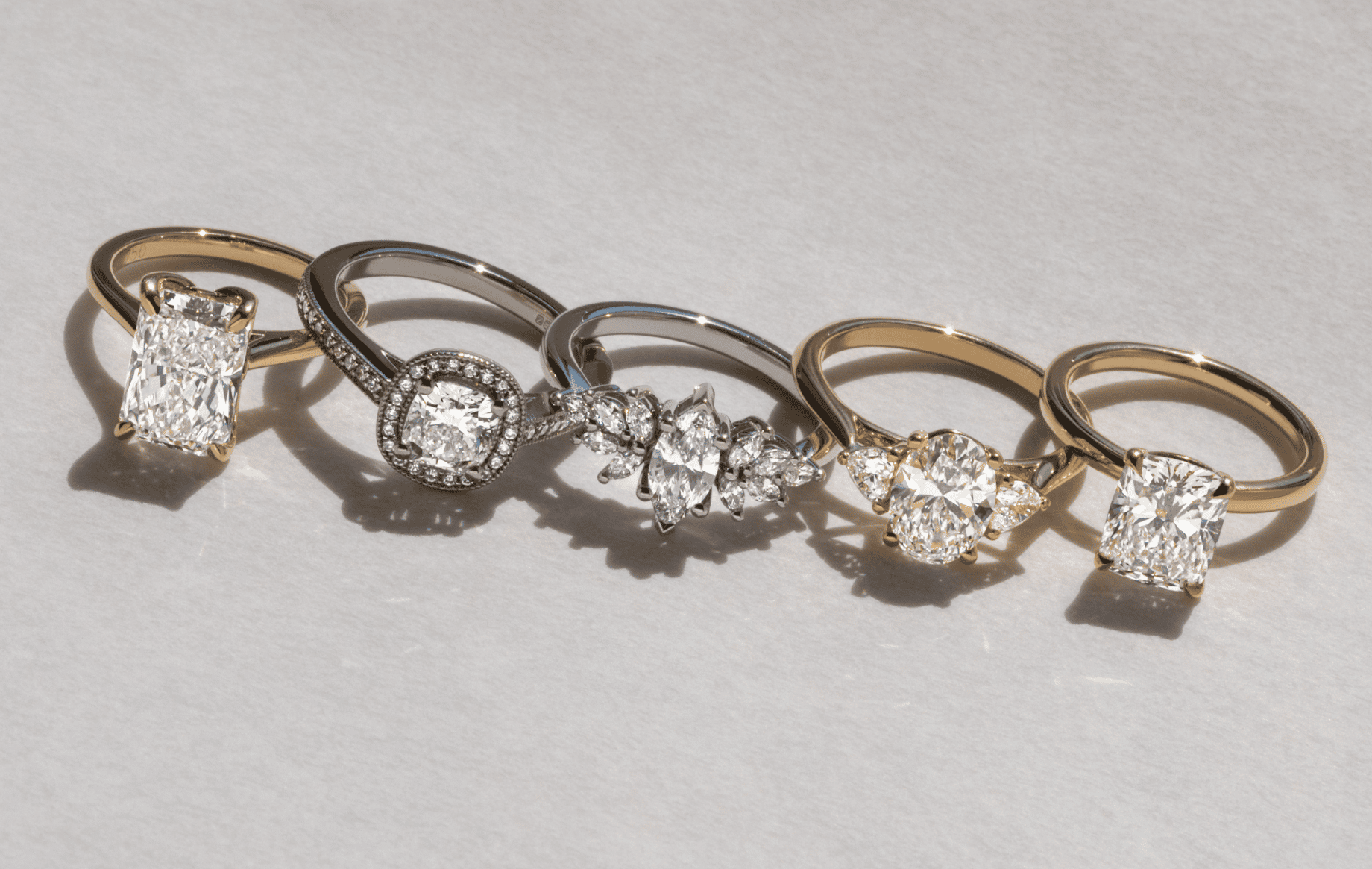
In our experience, the best place to begin is with a clear understanding of the design landscape. So think of this article as your introduction to the world of engagement ring styles and settings. We’ll guide you through the timeless classics and more contemporary options, so you feel fully prepared to choose a piece that reflects your unique love story

Understanding the Difference Between Ring Style and Setting

Before we get into the specific types of engagement rings, it’s helpful to clarify two terms that are often used interchangeably but mean slightly different things: style and setting.
The ring style refers to the overall aesthetic or visual theme of the ring. Is it vintage, modern, classic, or nature-inspired? The style dictates the mood and personality of the piece.
The setting, on the other hand, refers to the specific mechanical technique used to mount and secure the centre stone to the band. The setting is the architecture of the ring. It impacts the durability, the light performance of the diamond, and the day-to-day practicality of wearing the piece.
Style and setting are intrinsically linked, each enhancing the other. The style establishes the aesthetic direction, while the setting brings structure and function to the design. When thoughtfully combined, they result in a ring that feels both refined and enduring.
The Most Iconic Engagement Ring Settings
With this understanding in mind, let’s turn our attention to the most iconic engagement ring settings, each defined by its own aesthetic, structure, and visual impact.
Solitaire Setting: Timeless and Elegant
When most people picture an engagement ring, they picture a solitaire. It is the most popular and enduring of all designs, accounting for a significant portion of all rings chosen today.
A solitaire setting features a single centre stone mounted on a simple, unadorned metal band. The beauty of this design lies in its absolute minimalism. Because there are no accent diamonds or intricate metalwork to distract the eye, the centre stone commands all the attention. This makes it an excellent choice if you have invested in a high-quality diamond and want to show off its cut, colour, and clarity without any interference.
Solitaires are incredibly versatile. They pair beautifully with almost any wedding band, and they also suit any diamond shape (though the round brilliant and the oval cut are particularly striking in this minimalist setting).

Halo Setting: Brilliance and Impact
If your goal is maximum sparkle and visual impact, the halo setting is an exceptional choice. In this design, the centre stone is completely encircled by a ring of smaller accent diamonds.
This "angelic" frame serves two distinct purposes. First, it adds a tremendous amount of brilliance to the ring, as the smaller diamonds catch the light from every angle. Second, it creates an optical illusion that makes the centre stone appear significantly larger than its actual carat weight. In fact, a well-designed halo can make the main diamond look up to half a carat larger.
Halo settings can be adapted to suit various aesthetics. A round diamond in a round halo feels classic, while a cushion-cut diamond in a squared-off halo leans toward a vintage, romantic feel. And if you want even more drama, a double halo (featuring two concentric circles of diamonds) is incredibly luxurious.

Three-Stone Setting: Symbolic and Sophisticated
Also known as a trilogy ring, the three-stone setting is steeped in romantic symbolism. It features a prominent centre stone flanked by two slightly smaller side stones. Traditionally, these three stones are said to represent a couple's past, present, and future together.
This setting offers a wonderful opportunity for customisation. While many couples choose three diamonds of the same shape, you can also mix and match. A popular combination is a round or cushion-cut centre diamond paired with tapered baguettes or pear-shaped side stones.
You can also use the side stones to introduce a pop of colour. Flanking a central diamond with two vibrant sapphires or rich emeralds creates a distinctive, regal look that stands out from traditional all-diamond designs.

Pavé Setting: Continuous Sparkle
The term "pavé" (pronounced pah-vay) comes from the French word for "paved," and it perfectly describes this setting technique. In a pavé setting, the metal band is closely set with tiny diamonds, held in place by microscopic prongs or beads. The result looks like a continuous surface of sparkling stones, much like a cobblestone street made of diamonds.
A pavé band adds a layer of luxurious detail to any ring without overpowering the centre stone. It is often combined with other engagement ring styles; for example, a pavé band paired with a halo setting is a highly sought-after combination for those who love a glamorous aesthetic.

Bezel Setting: Sleek and Secure
If your partner has an active lifestyle or a more hands-on profession, the bezel setting offers unparalleled security and a distinctly modern aesthetic. Instead of using prongs to hold the diamond, a bezel setting features a thin rim of precious metal that completely or partially encircles the perimeter of the stone.
This design protects the edges of the diamond from chips and snags, making it the most durable of all engagement ring styles. It also creates a sleek, clean line that appeals to those who prefer contemporary, minimalist jewellery.
While a full bezel completely surrounds the stone, a half-bezel leaves the sides open, allowing more light to enter the diamond while still providing excellent protection. Bezel settings work exceptionally well with step-cut diamonds, such as emerald or Asscher cuts, highlighting their geometric precision.

Milgrain Setting: Vintage and Ornate
For couples who appreciate the romance of bygone eras, vintage-inspired engagement ring styles offer a beautiful alternative to modern minimalism. One of the defining characteristics of these antique styles is milgrain detailing.
Milgrain, which translates to "a thousand grains," is a jewellery technique where tiny metal beads are applied to the edges of a ring's band or around the setting of a stone. This delicate beading creates a textured, intricate border that catches the light beautifully and gives the ring a distinctly heirloom quality.
Milgrain is often paired with other vintage elements, such as filigree (delicate, lace-like metalwork) or geometric Art Deco shapes. It’s a wonderful way to add character and historical depth to a new ring, making it feel as though it has been passed down through generations.

Cathedral Setting: Architectural and Elevated
Drawing inspiration from the sweeping arches of Gothic architecture, the cathedral setting is defined by how the band rises to support the centre stone. Instead of the diamond sitting flat on top of the band, the metal slopes upward, cradling the stone and elevating it above the finger.
This elevated profile creates a statuesque, dramatic look. It also allows more light to hit the diamond from the sides and bottom, enhancing its natural fire and brilliance. The arches of a cathedral setting provide a beautiful canvas for extra detailing, such as hidden diamonds or intricate milgrain engraving.

Emerging Engagement Ring Trends for 2025
While classic styles will always have their place, the landscape of engagement ring styles is constantly evolving.
One of the most notable trends is the rise of the East-West setting. In this design, elongated diamond shapes (such as the oval, marquise, or emerald cut) are set horizontally across the finger rather than vertically. This simple rotation completely transforms the look of the stone, creating a modern, architectural feel that feels fresh and unexpected.
We are also seeing a strong resurgence of mixed metals. Rather than sticking strictly to one colour, couples are combining white gold or platinum settings with yellow or rose gold bands. This two-tone approach highlights the crisp white brilliance of the diamond while retaining the warmth of yellow gold against the skin.
The Dramatic Frame of the Split Shank Setting
Another popular design element that can dramatically alter the look of a ring is the split shank. In a standard setting, the band remains a single, solid piece of metal as it meets the centre stone. In a split shank setting, the band divides into two (or sometimes more) separate strands as it approaches the diamond.
This split creates a negative space that frames the centre stone, drawing the eye inward and making the diamond appear more prominent. The strands can be left plain for a sleek, modern look, or they can be encrusted with pavé diamonds for maximum glamour.

The split shank is particularly flattering for larger or elongated diamond shapes, such as the oval, pear, or marquise cut, as the wider base provides excellent structural support and visual balance for the stone.
The Rise of Coloured Gemstones
Today, diamonds are no longer the only acceptable choice for an engagement ring. There is a growing appetite for vibrant, coloured gemstones that offer a distinctive alternative to the traditional clear stone.
Sapphires, with their rich royal blue hues, are incredibly popular, partly due to their excellent durability, which makes them suitable for daily wear. Emeralds and rubies are also highly sought after for their bold, saturated colours.
Opting for a coloured gemstone introduces a sense of individuality and character to the ring. It allows you to create something that feels entirely your own.

Choosing the Right Metal for Your Setting
Beyond style and setting, the metal you choose for the band also plays a crucial role in the overall look and longevity of the ring.
Platinum is the premier choice for fine jewellery. It is naturally white, incredibly durable, and hypoallergenic. Unlike white gold, which requires periodic rhodium plating to maintain its bright white finish, platinum will never fade or change colour. It’s also denser, providing a highly secure setting for valuable stones.
Yellow gold is another option, offering a warm, classic aesthetic that has seen a massive resurgence in recent years. It flatters a wide range of skin tones and provides a beautiful contrast to bright white diamonds. Rose gold is also popular and offers a softer, vintage-inspired alternative to yellow gold.

Comparing Popular Engagement Ring Styles
To help you narrow down your options, here is a quick comparison of the most popular engagement ring styles, along with their key characteristics and who they’re best suited for.
| Engagement Ring Styles Compared | ||
| Setting Style | Key Characteristic | Best Suited For |
| Silhouette | Single centre stone, unadorned band | Minimalists, showcasing a high-quality diamond |
| Halo | Centre stone surrounded by smaller diamonds | Maximising sparkle and perceived diamond size |
| Three-Stone | Centre stone flanked by two side stones | Those who appreciate romantic symbolism |
| Pavé | Band encrusted with tiny, closely set diamonds | Adding luxurious, continuous sparkle |
| Bezel | Metal rim encircling the centre stone | Active lifestyles, modern and sleek aesthetics |
| Cathedral | Arches rising from the band to support the stone | Architectural elegance, elevating the diamond |
When it comes to making your final decision, choosing between different engagement ring styles ultimately comes down to understanding your partner's lifestyle and aesthetic preferences.
Look at the jewellery they already wear. Do they gravitate toward clean, modern lines, or do they prefer intricate, vintage-inspired details? Consider their daily routine. If they work with their hands or have a very active lifestyle, a lower-profile setting like a bezel or a sturdy solitaire might be more practical than a high-set cathedral or a delicate pavé band.
Remember that there is no single "right" choice. The perfect engagement ring is simply the one that makes them smile every time they look down at their hand.
The Bespoke Engagement Ring Experience at Flawless Fine Jewellery

If you find yourself drawn to elements of several different engagement ring styles, the best approach may be to create something entirely custom.
Designing a bespoke ring allows you to blend your favourite features, perhaps the security of a bezel setting with the vintage charm of a milgrain band, or a classic three-stone layout featuring unique, coloured side stones.
At Flawless Fine Jewellery, our bespoke jewellery service is designed to bring your specific vision to life. We work closely with you to select the perfect stones (either earth-mined gems or our exceptional lab-grown diamonds), and craft a setting that’s perfectly aligned with your partner’s style.
If this sounds like something you might be interested in, we invite you to book a consultation with us today. Let’s create something as unique as your love story.
FAQ’s
What is the most popular engagement ring style?
The classic solitaire remains the most popular engagement ring style globally. Its timeless, minimalist design appeals to a wide range of tastes and allows the centre diamond to take centre stage without any visual distractions.
Can I change the setting of my ring later?
Absolutely. Many people choose to upgrade or change their settings for a significant anniversary. You can keep your original centre diamond and have it remounted into a new style, such as moving from a simple solitaire to a more elaborate halo design.
Do halo settings make the diamond look bigger?
Yes, a halo setting is an excellent way to increase the visual footprint of your ring. The surrounding circle of accent diamonds creates an optical illusion that can make the centre stone appear up to half a carat larger than its actual weight.
Which setting is best for an active lifestyle?
For those with active lifestyles or hands-on jobs, a bezel setting is generally the safest choice. Because the metal completely or partially encircles the diamond, it protects the edges from chipping and prevents the stone from snagging on clothing or equipment.





Need help choosing ?
We're happy to help