5 May 2026 — by Flawless Fine Jewellery — Reading time 3 minutes
How to Choose Engagement Rings: Guide to Style, Stone and Shape
How to Choose Engagement Rings: Guide to Style, Stone and Shape
An engagement ring marks one of the most significant moments in a couple’s life. It symbolises lifelong commitment, it tells a unique love story, and in many families, it will be passed down from generation to generation.
It goes without saying, but choosing an engagement ring is a big decision, and it deserves more than a rushed afternoon on the high street.
So if you’re feeling the weight of that decision, you’re in the right place. Read on for our full guide on how to choose an engagement ring your partner will love, complete with everything you need to know about styles, stones, settings, and more.

- Understanding Engagement Ring Styles and Settings
- Selecting the Perfect Diamond Shape for Your Engagement Ring
- Navigating the 4Cs: How to Choose Engagement Rings with Confidence
- Choosing Between Earth-Mined and Lab-Grown Diamonds
- Selecting the Right Precious Metal
- The Importance of Ring Sizing and Maintenance
- The Bespoke Design Experience at Flawless Fine Jewellery
- Find the Ring That Tells Your Love Story Perfectly
- FAQ's
Understanding Engagement Ring Styles and Settings
When it comes to choosing engagement rings, a good place to begin is with the setting, which is the foundation of the ring and one of the biggest influences on its overall look and feel. Here’s a closer look at some of the most popular engagement ring settings and what makes each one unique.
Solitaire
The solitaire setting is the ultimate classic. With just a single central stone held in place by prongs, it lets the diamond take centre stage without distraction. It’s simple, elegant, and never goes out of style; perfect for someone who loves a clean, timeless look where the quality of the diamond really shines through.

Halo
If your partner loves sparkle, the halo setting is hard to beat. A circle of smaller diamonds surrounds the centre stone, amplifying its brilliance and making it appear larger than it is. It’s a more eye-catching, glamorous style, often with a hint of vintage charm that feels both romantic and modern at the same time.

Three-stone
The three-stone setting carries beautiful symbolism, traditionally representing a couple's past, present, and future. A centre diamond is paired with two side stones, which can either match or contrast for a more unique look. It’s a versatile choice that feels personal and considered, with plenty of room to customise.

Bezel
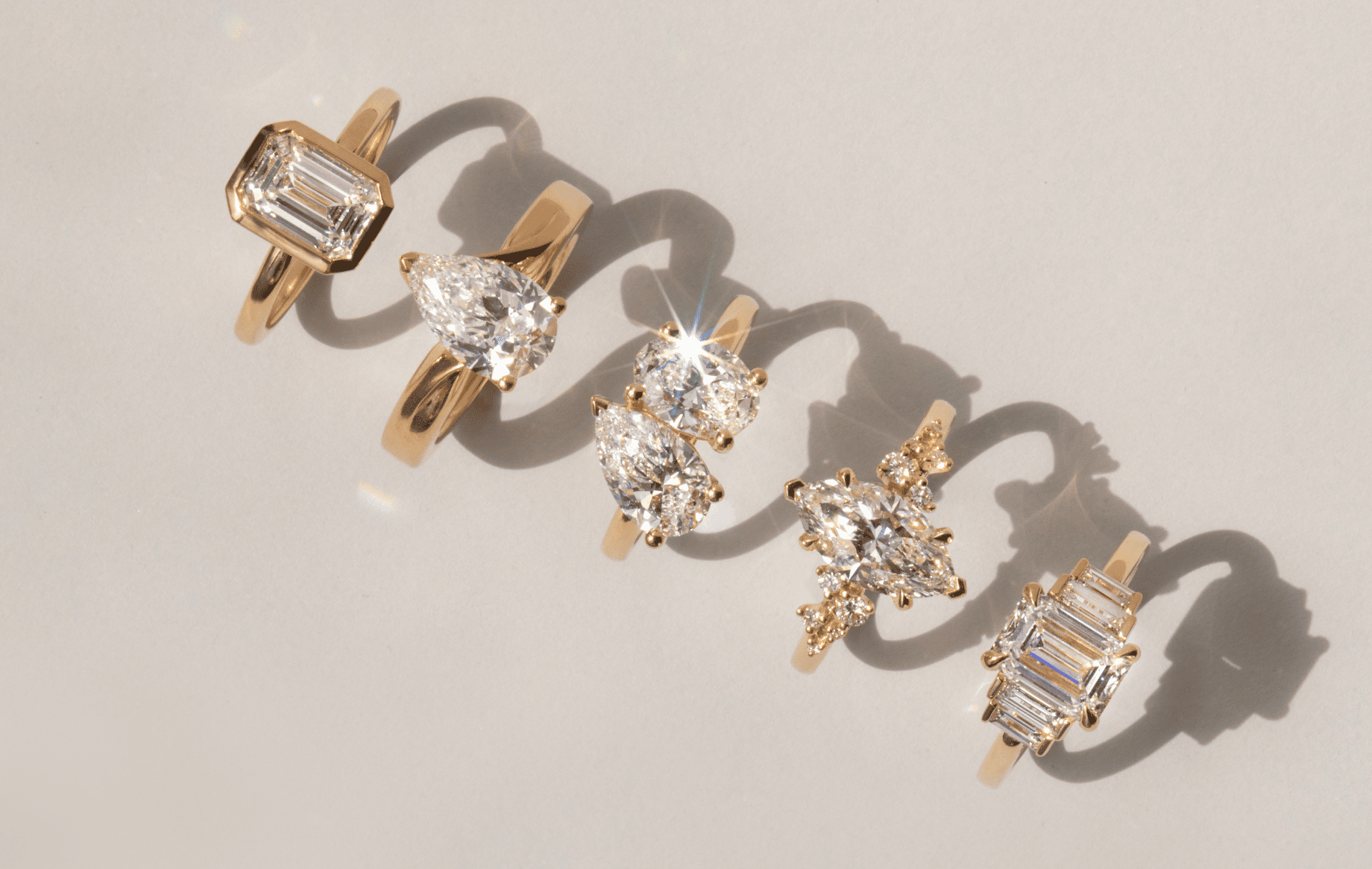
For something sleek and practical, the bezel setting is another great option, especially for someone with a more active lifestyle. Instead of prongs, the diamond is wrapped in a smooth rim of metal, keeping it secure and well protected. The result is a modern, minimal design that’s as durable as it is stylish.

Selecting the Perfect Diamond Shape for Your Engagement Ring
Next up is the shape of the diamond, which is perhaps the most defining visual characteristic of the ring.
But before we get to that, it’s important to distinguish between diamond shape and cut style. As the Gemological Institute of America (GIA) notes, shape refers to the outline of the stone when viewed from above, while cut style refers to how the facets are arranged to interact with light.
Now, on to the shapes. The table below gives a quick overview of the most popular diamond shapes, along with their defining characteristics and who they tend to suit best.
| How to Choose an Engagement Ring: Quick Guide to Diamond Shapes | ||
| Diamond Shape | Key Characteristic | Best Suited For |
| Round Brilliant | Maximum sparkle and fire | Classic, timeless aesthetics |
| Oval | Elongated, graceful curves | Flattering the finger, maximising perceived size |
| Emerald | Elegant "hall of mirrors" effect | Vintage sophistication, Art Deco style |
| Pear | Distinctive teardrop silhouette | Unique, romantic designs |
| Cushion | Soft, rounded square corners | Antique-inspired romance |
The round brilliant cut is by far the most popular diamond shape. Designed with 57 or 58 facets, it’s expertly cut to reflect as much light as possible, giving it that signature sparkle people instantly recognise. It’s a safe yet stunning choice that works beautifully in almost any setting and suits a wide range of hand shapes.
Elongated shapes, such as oval, pear, and marquise, are loved for how flattering they look on the finger. Their stretched silhouettes create the illusion of longer, more slender hands, and they often appear larger than a round diamond of the same carat weight. The oval, in particular, has become increasingly popular thanks to its soft curves and impressive brilliance, offering a balance between classic and contemporary.
Step-cut diamonds, including emerald and Asscher shapes, offer something entirely different. Instead of a sparkling, light-scattering effect, they feature long, clean facets that create a subtle, mirror-like shine, often described as a “hall of mirrors.” These shapes feel refined and architectural, with a distinct Art Deco influence. Because their open facets reveal more of the stone, it’s worth prioritising higher clarity and colour for the best overall appearance.
Choosing Between Earth-Mined and Lab-Grown Diamonds
Today, modern couples have a choice between traditional earth-mined diamonds and lab-grown alternatives. Both are equally beautiful, but they tend to appeal to different priorities and values.
Earth-mined Diamonds
Earth-mined diamonds are formed deep within the earth over billions of years, which gives them a sense of rarity and history that many people find incredibly romantic. For some, that natural origin is part of the story they want their ring to tell. If you choose an earth-mined diamond, it’s important to work with a jeweller who prioritises ethical sourcing and conflict-free practices.

Lab-grown Diamonds
Lab-grown diamonds, on the other hand, are created in controlled environments using advanced technology that replicates the natural formation process. What’s important to know is that they are chemically, physically, and visually identical to earth-mined diamonds, even experts require specialised equipment to tell them apart. They’re also graded by the same institutions, such as the GIA and IGI, using the same standards.
For many people, lab-grown diamonds offer a more accessible and sustainable option. They’re also usually more affordable, which means you can often choose a larger stone or a higher-quality diamond while staying within your budget.

Selecting the Right Precious Metal
The metal you choose for the band plays a bigger role than you might think. It not only affects how the ring looks but also how it wears over time and how much maintenance it will need.
Here’s a simple guide to the most popular options:
➤ Platinum (durable and premium): Often considered the top choice for fine jewellery. It’s naturally white, extremely durable, and hypoallergenic, making it ideal for everyday wear. Unlike white gold, it won’t need re-plating to maintain its colour. Over time, it develops a soft, matte-like patina (something many people love), but it can always be polished back to a bright shine if preferred.
➤ White Gold (sleek and affordable): Offers a similar look to platinum but at a more accessible price point. It’s made by mixing gold with white metals and finished with a rhodium coating to give it that bright, silvery finish. Over time, this coating can wear off, so occasional re-plating is needed to keep it looking its best.
➤ Yellow Gold (classic and warm): A timeless option that has seen a strong return in recent years. Its rich, warm tone creates a beautiful contrast against white diamonds and tends to complement warmer skin tones particularly well. It’s also a forgiving choice if your diamond isn’t at the very top of the colour scale.
➤ Rose Gold (romantic and distinctive): Has a soft, pink hue that’s created by adding copper to the gold. It feels slightly more unique and romantic, with a subtle vintage appeal. It’s also surprisingly durable and suits a wide range of skin tones.

Ultimately, the right metal comes down to personal style, lifestyle, and how much maintenance you’re comfortable with. If you’re not sure which metal to go with, think about the jewellery your partner already wears and choose a metal that will feel natural alongside their everyday pieces.
The Importance of Ring Sizing and Maintenance
Once you’ve chosen the ring itself, there are just two more final details to get right: making sure it fits perfectly and knowing how to care for it over time.

A well-sized ring should slide on comfortably, only needing a slight twist to come off. That balance means it will feel secure without being tight or uncomfortable. If you’re planning a surprise proposal, getting the size right can be a bit tricky. A good approach is to borrow a ring your partner already wears (ideally on the correct finger) or ask a close friend or family member for help. If it’s not quite perfect, don’t worry. Resizing is always an option, and most jewellers can adjust the fit after the proposal.
Looking after your ring is just as important. With everyday wear, it will naturally come into contact with things like lotions, oils, and dust, which can dull its sparkle over time. A simple clean at home using warm soapy water and a soft brush can help keep it looking its best.
It’s also worth having your ring professionally checked and cleaned once a year. A jeweller can make sure the stone is secure, polish the metal, and restore its original shine (especially for white gold, which may need occasional re-plating). With regular, intentional care, your engagement ring will stay just as beautiful as the day you first put it on.
The Bespoke Design Experience at Flawless Fine Jewellery
If you can’t find a ring that perfectly captures your vision, commissioning a bespoke engagement ring is a deeply rewarding alternative. This process allows you to dictate every detail, with complete control over the central stone and the finest intricacies of the setting.
At Flawless Fine Jewellery, the bespoke journey begins with a consultation in our Hatton Garden showroom or virtually. Our expert jewellers work closely with you to translate your ideas into precise CAD (Computer-Aided Design) renderings. This technology allows you to view a lifelike 3D model of your ring and make adjustments before crafting begins.

Every bespoke piece is crafted by hand in our London workshop, using traditional techniques and careful attention to detail at every stage. Each step is carried out locally, allowing us to maintain complete control over quality and craftsmanship throughout the process.
The result is a truly one-of-a-kind piece, something that not only reflects your personal story but also carries the heritage and artistry of British jewellery making.
Find the Ring That Tells Your Love Story Perfectly
The art of choosing an engagement ring is all about balancing the practical considerations with emotional significance. While the details matter, the perfect engagement ring is ultimately the one that feels right, reflecting both your partner’s style, values, and your story together.
When you’re ready to start looking for the perfect ring, our team of passionate jewellers is here to guide you through this process with transparency, expertise, and care. We invite you to explore our curated collections or discuss your vision for a custom creation. Book a consultation today, and let’s find (or create) a ring that tells your unique love story perfectly.
FAQ’s
How much should I spend on an engagement ring?
There is no set rule for how much you should spend. The traditional "two months' salary" guideline is outdated. Instead, establish a budget that feels comfortable for your financial situation. Our jewellers can help you maximise your budget by balancing the 4Cs, exploring lab-grown options, or selecting shapes that offer greater visual impact per carat.
Can I design an engagement ring with a gemstone instead of a diamond?
Absolutely. Gemstone engagement rings are a beautiful and distinctive choice. Sapphires and rubies are excellent alternatives, as they rank a 9 on the Mohs scale of hardness, making them highly durable for daily wear. Emeralds are also stunning but require slightly more careful wear due to their natural inclusions.
What is the most durable setting for an active lifestyle?
For those with active lifestyles or hands-on professions, a bezel setting is the most secure option, as it completely encircles the diamond in metal. Alternatively, a low-profile prong setting or a design with a sturdy cathedral setting can provide excellent security while still allowing light to reach the stone.
How long does it take to create a bespoke engagement ring?
The bespoke process typically takes between 6 and 10 weeks, depending on the complexity of the design and the time of year. This includes the initial consultation, the creation and refinement of CAD renderings, the sourcing of your perfect stone, and the meticulous hand-crafting of the final piece in our London workshop.





Need help choosing ?
We're happy to help