15 May 2026 — by Flawless Fine Jewellery — Reading time 3 minutes
High vs Low-Set Engagement Rings: How to Choose
High vs Low-Set Engagement Rings: How to Choose
There comes a point in every engagement ring journey when it becomes clear that selecting the diamond is only part of the story.
Once the perfect stone has been chosen, attention turns to how it will be presented and how it will sit upon the hand. This is where the distinction between high and low-set designs takes on true significance.
What may initially seem like a subtle technical detail is, in reality, a defining element of the ring’s character. The height of the setting not only influences its visual presence and the way it captures light, but it also influences how it feels to wear it each day. A design that appears striking in a showroom may not suit a more hands-on lifestyle, while a lower, more refined profile may offer understated elegance with effortless practicality.
To help you find the perfect balance between beauty, comfort, and everyday wearability, read on for our full guide on high vs low-set engagement rings and how to select a setting that complements both your style and daily life.

- Understanding Setting Height
- The Appeal of High-Set Engagement Rings
- Popular Styles for High-Set Rings
- The Drawbacks of High-Set Rings
- The Rise of Low-Set Engagement Rings
- Popular Styles for Low-Set Engagement Rings
- The Drawbacks of Low-Set Rings
- The Impact of Diamond Shape on Setting Height
- The Role of Custom Design and Finding the Perfect Middle Ground
- Caring for Your Engagement Ring: High-Set vs Low-Set Considerations
- Comparing High and Low Set Engagement Rings
- Making the Final Call Between a High vs Low Setting for Your Engagement Ring
- FAQ's
Understanding Setting Height

Before we compare the two options, it helps to understand exactly what jewellers mean when they talk about setting height.
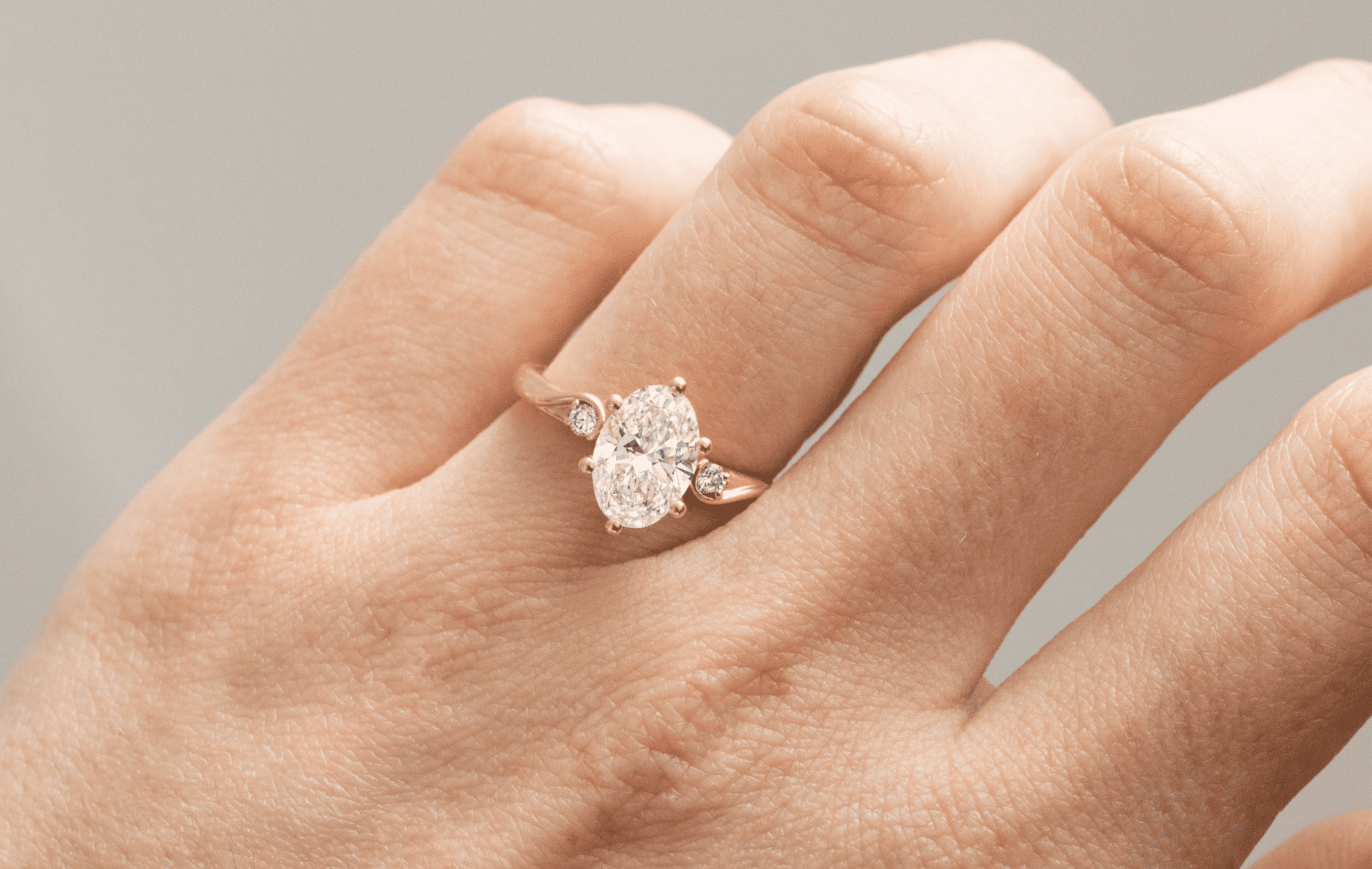
The height of a ring refers to the distance between the band (the part that wraps around your finger) and the culet (the very bottom tip of the diamond or gemstone). In a high-set ring, there is visible space between the culet and the band, lifting the stone prominently above the finger. In these practical settings, the culet rests very close to, or even flush with, the band itself.
This distinction fundamentally changes the architecture of the ring, with the setting height affecting both the size of the stone and how your wedding band fits alongside it.
The Appeal of High-Set Engagement Rings
High-set rings are the traditional image most people have in mind when they picture an engagement ring. Here are just a few reasons why they remain such a timeless and popular choice.
Maximum Brilliance and Sparkle
The primary advantage of a high setting is light performance. Because the diamond is elevated above the band, light can enter the stone from all angles. This unobstructed light flow maximizes the diamond's natural brilliance and fire, creating that breathtaking, show-stopping sparkle.

The Illusion of Size
Elevating the stone also creates an optical illusion. When a diamond is lifted high above the finger, it appears larger and more prominent than it would if it were set lower down. If you want your centre stone to be the absolute focal point of the design, a high setting will make sure it commands attention.

Easy Wedding Band Pairing
From a practical design standpoint, high-set rings are incredibly versatile when it comes to pairing. Because the centre stone is lifted out of the way, you can easily slide a straight, traditional wedding band right up against the engagement ring so they sit perfectly flush.

Popular Styles for High-Set Rings
If you’re drawn to the drama and brilliance of a high profile, these classic settings are likely to appeal to you.
The Cathedral Setting
The cathedral setting is the quintessential high-profile design. The band slopes upward to meet the centre stone, creating elegant arches that resemble the vaulted ceilings of a cathedral. This design provides structural support for the high stone while adding beautiful architectural detail to the profile of the ring.

The Classic Tiffany Setting

The Hidden Halo
A hidden halo features a delicate circle of small diamonds set just beneath the centre stone, visible only from the side profile. This detail requires a high setting to accommodate the extra tier of diamonds, adding a secret layer of sparkle to the design.

The Drawbacks of High-Set Rings
While high-set rings are undeniably beautiful, high settings do come with some practical considerations.
Vulnerability to Damage
The higher a stone sits, the more exposed it is to the world. High-set rings are significantly more prone to knocking against doors, catching on clothing, or snagging on hair. Over time, these daily impacts can loosen the prongs holding the diamond in place, increasing the risk of losing the stone.

Lifestyle Limitations
If you lead an active lifestyle, work in healthcare, or simply use your hands a lot, a high setting can quickly become a nuisance. You may find yourself constantly taking the ring off to put on gloves, wash dishes, or go to the gym, and every time you take the ring off, you increase the chances of misplacing it.
The Rise of Low-Set Engagement Rings
In recent years, there has been a significant shift toward low settings. As modern couples prioritize comfort and wearability alongside aesthetics, these practical designs have surged in popularity for the following reasons.
Unmatched Comfort and Security
The greatest benefit of low settings is their security. Because the stone sits close to the finger, it’s protected from the daily bumps and knocks that a high-set ring endures. The centre stone is nestled safely within the architecture of the ring, making it far less likely to snag on a jumper or scratch a patient.

Perfect for Active Lifestyles
For doctors, nurses, teachers, athletes, and anyone who works with their hands, low-set rings are often the only practical choice. They allow you to wear your ring continuously without it interfering with your daily tasks. You don’t have to choose between wearing your symbol of commitment and doing your job effectively.

Beyond practicality, low-set rings offer a distinctly modern, understated aesthetic. They feel sleek, architectural, and sophisticated. Rather than shouting for attention, a low-profile ring feels like a natural extension of the wearer's hand.
Popular Styles for Low-Set Engagement Rings
If you’ve decided that the practicality of a low profile is right for you, there are several stunning setting styles to consider, each offering its own balance of security, comfort, and design.
The Bezel Setting
The bezel setting is the ultimate choice for low-set engagement rings. Instead of using prongs, a thin rim of metal completely encircles the perimeter of the diamond, holding it securely in place. This creates a smooth, snag-free surface that is incredibly durable and offers a clean, contemporary look

The Basket Setting
If you prefer the look of traditional prongs but want a lower profile, a basket setting is an excellent option. The prongs extend up from a base that sits flat against the finger, creating a "basket" that cradles the stone securely while keeping it as low as possible.

The Tension Setting
For a truly modern aesthetic, a tension setting uses the compressive force of the band itself to hold the diamond in place, with no prongs or bezels visible from the top. This allows the stone to sit quite low while still appearing to float within the band.

The Drawbacks of Low-Set Rings
While they are incredibly practical, low-profile designs also require some compromises worth mentioning.
Reduced Light Flow
Because the stone sits closer to the finger and is often surrounded by more metal, less light can enter the bottom and sides of the diamond. While a well-cut diamond will still sparkle beautifully in a low setting, it may not achieve the blinding brilliance of a high-set stone.

Tricky Wedding Band Pairings
The most common challenge with low-profile designs is finding a wedding band that fits. Because the centre stone sits so low, a straight wedding band will often bump against the setting, creating a visible gap between the two rings. To achieve a flush fit, you will usually need a curved, contoured, or open wedding band designed specifically to accommodate the low setting.

The Impact of Diamond Shape on Setting Height
When considering the height of your setting, the shape of your centre stone plays a significant role. Some diamond shapes naturally lend themselves to lower profiles, while others require more depth to accommodate their cut.
Here are just a few things to bear in mind when choosing the right setting height for your diamond shape.
Round Brilliant Cuts
The round brilliant cut is the most popular diamond shape, and it’s incredibly versatile when it comes to setting height. Because of its symmetrical proportions, a round diamond can be set quite low in a bezel or basket setting, or elevated high in a classic cathedral or Tiffany-style prong setting. The choice here is entirely driven by your aesthetic preference and lifestyle needs.

Elongated Shapes (Oval, Marquise, Pear)
Elongated shapes like ovals, marquise cuts, and pear shapes often require a slightly higher setting to accommodate their depth, particularly at the culet (the bottom point). However, skilled jewellers can often design custom low-profile settings that protect the delicate points of marquise and pear shapes while keeping the overall height as low as possible. A bezel setting is particularly effective for these shapes, as it protects the vulnerable tips from chipping.

Step Cuts (Emerald and Asscher)
Step cuts, such as emerald and Asscher cuts, are known for their clean lines and architectural elegance. These shapes often look stunning in low-profile settings, particularly sleek bezel or half-bezel designs that emphasize their geometric symmetry. Because step cuts rely on clarity and broad flashes of light rather than the intense, shattered sparkle of brilliant cuts, they do not suffer as much from the reduced light flow of a lower setting.

The Role of Custom Design and Finding the Perfect Middle Ground
One of the greatest advantages of choosing a bespoke engagement ring is the ability to fine-tune the setting height to your exact specifications.
For example, an experienced jeweller can design a setting that’s just high enough to allow a straight wedding band to sit flush, but low enough to feel secure and comfortable for daily wear. This precise calibration is often impossible to find in off-the-shelf rings.
Custom design also allows you to incorporate personal details into the setting itself. Even with a low profile, you can add hidden elements like a secret birthstone set inside the band, or intricate engraving along the gallery. These touches make the ring uniquely yours, regardless of how high or low the centre stone sits.

Caring for Your Engagement Ring: High-Set vs Low-Set Considerations
An engagement ring is designed to be worn and cherished every day, making proper care an essential part of its longevity. While both high and low settings require regular maintenance, their structural differences mean each calls for a slightly different approach to cleaning and upkeep.
Cleaning High-Set Rings
High-set rings require more frequent cleaning, as dirt, lotion, and oils can easily become trapped in the open spaces beneath the diamond. To keep your stone sparkling, soak the ring in a solution of warm water and mild dish soap, then gently scrub around and underneath the setting with a soft-bristle toothbrush.
Cleaning Low-Set Rings
Low-profile designs can be slightly more challenging to clean, as there is less access to the underside of the diamond. However, the same gentle soaking and brushing method applies. It is particularly important to clean low settings regularly to prevent buildup that can dull the diamond's appearance.
Professional Inspections
Regardless of the setting height, you should have your engagement ring professionally inspected by a jeweller at least once a year. They will check the integrity of the prongs or bezel, make sure the stone is secure, and give the ring a professional polish to restore its original shine. For high-set rings, these inspections are especially important, as the exposed prongs are more susceptible to wear and tear.

Comparing High and Low Set Engagement Rings
To recap the key differences between high and low-set engagement rings mentioned in this guide, the following table compares each option side by side.
| High vs Low-Set Engagement Rings: Key Differences Compared | ||
| Feature | High-Set Rings | Low-Set Rings |
| Visual Impact | Dramatic, prominent, makes stone appear larger | Understated, sleek, integrated with the band |
| Light Performance | Maximum brilliance and sparkle | Excellent, but slightly reduced light flow |
| Wedding Band Pairing | Easy to pair with straight bands | Often requires curved or custom bands |
| Durability | More vulnerable to knocks and snagging | Highly secure and protected |
| Lifestyle Suitability | Best for careful wearers | Ideal for active lifestyles and hands-on jobs |
| Maintenance | Requires frequent cleaning, easier to access | Requires regular cleaning, harder to access |
Making the Final Call Between a High vs Low Setting for Your Engagement Ring
Choosing between a high and low-set engagement ring is all about striking a balance between beauty, comfort, and the way the piece will be worn each day.

➤ If you’re drawn to exceptional brilliance, a timeless silhouette, and effortless pairing with a classic wedding band, a high setting will probably be your best bet.
➤ If you have an active, hands-on lifestyle and value comfort and practicality, a low-profile setting is a refined alternative.
➤ If you want a balance of both, a medium-height setting can provide presence and brilliance while still feeling secure and wearable.
➤ And if your heart is set on something that’s unique to you, a bespoke design allows every proportion, including the setting height, to be customised to your personal vision with precision.
Ultimately, there is no single correct choice, only the one that feels most aligned with you.
When you’re ready to start narrowing down your engagement ring design options, we invite you to explore our curated collections or discuss your vision for a custom creation. Book a consultation with us today, and let’s find (or design) your perfect engagement ring.
Can I change a high setting to a low setting later?
In most cases, changing the height of a setting requires completely remaking the head of the ring (the part that holds the stone), and sometimes the entire band. It is a significant alteration, which is why it is so important to consider your lifestyle before making your initial purchase.
Do low-set engagement rings make the diamond look smaller?
They can. Because the stone is not elevated and pushed toward the viewer, it may appear slightly less prominent than it would in a high setting. However, the difference is often subtle, and the added security is usually worth the trade-off for those with active lifestyles.
What is a "medium" set ring?
Many jewellers offer settings that fall somewhere in the middle; high enough to allow a straight wedding band to sit flush, but low enough to offer more security than a traditional cathedral setting. A trellis setting is a great example of a medium-height option that balances both needs.

Can I return or exchange a piece if they do not love it?
Most reputable jewellers offer a return or exchange policy for pieces from their standard collections, provided the item is unworn and in its original condition. However, bespoke or custom-engraved pieces are typically non-refundable. It’s always a good idea to clarify the return policy before making your final purchase.




Need help choosing ?
We're happy to help