13 May 2026 — by Flawless Fine Jewellery — Reading time 3 minutes
What is a Marquise Diamond? A Complete Guide
What is a Marquise Diamond? A Complete Guide
Legend has it that in 18th-century France, King Louis XV commissioned a diamond cut specifically to match the shape of his mistress's perfectly curved lips. That romantic, slightly scandalous origin story is exactly where the marquise diamond began.
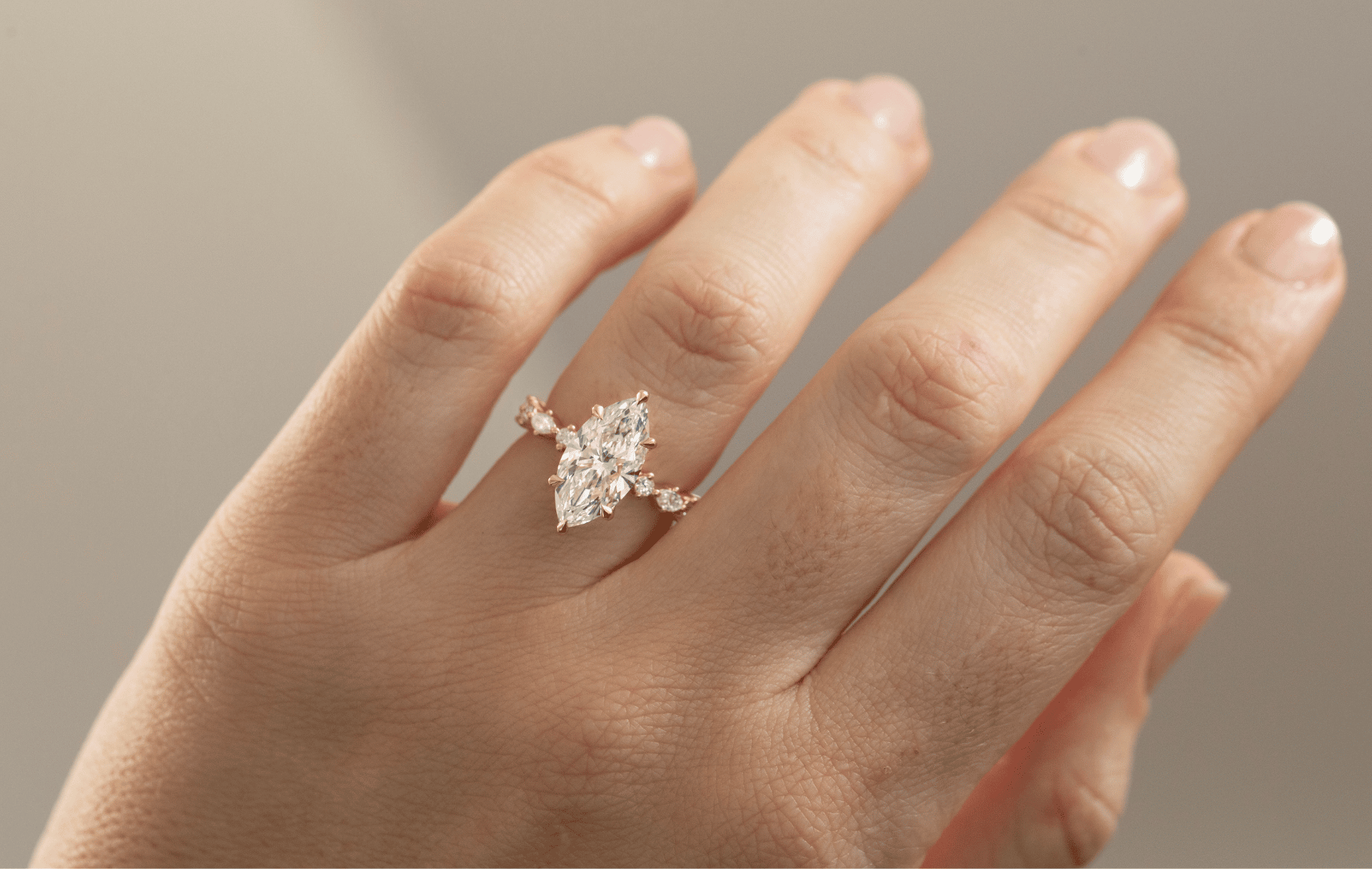
Today, when clients visit our Hatton Garden showroom and ask, "What is a marquise diamond?", they are usually drawn to its striking, elongated silhouette. It’s a shape that feels both vintage and incredibly modern, offering a distinctive alternative to the classic round brilliant.
If you’re considering this elegant cut for an engagement ring or a bespoke piece of jewellery, understanding its unique characteristics will help you make the best choice. It goes without saying, but knowing what to look for in terms of proportions and symmetry is essential when selecting this uniquely shaped diamond.
So in this guide, we’re exploring the history, the anatomy, and the best ways to style a marquise diamond, helping you decide if it is the right fit for your personal style.

- The Royal History of the Marquise Cut
- What is a Marquise Diamond Anatomically?
- The Importance of the Length-to-Width Ratio
- Symmetry and Shape Appeal
- The Bow-Tie Effect Explained
- Why Choose a Marquise Diamond?
- Marquise Diamond Settings and Design Considerations
- Comparing the Marquise to Other Diamond Shapes
- Creating Your Perfect Ring
- FAQ's
The Royal History of the Marquise Cut
The story of the marquise cut diamond is deeply rooted in French royalty. In the 1740s, King Louis XV was captivated by Jean Antoinette Poisson, who would become his chief mistress and the Marquise de Pompadour. According to historical accounts, the king asked his court jeweller to create a diamond shape that resembled her smile.
The resulting cut was named the "marquise" in her honour. It was also frequently referred to as a "navette," which translates to "little ship" in Old French, because its elongated body and pointed ends resembled the hull of a racing yacht.
This nautical association made the cut particularly popular during the Edwardian era in the early 20th century, as sailing was a favoured pastime of King Edward VII and high society. The shape saw another massive surge in popularity during the 1970s, becoming a staple in bridal jewellery before eventually giving way to square cuts like the princess. Today, the marquise is experiencing a major renaissance, embraced by modern brides and recently brought back into the spotlight by Selena Gomez’s engagement ring, appealing to those who want something both romantic and refreshingly unique.

How the Cut Evolved Over Time
While the original 18th-century stones were cut by hand and lacked the precision of modern diamonds, the shape has evolved significantly. Early versions of the marquise were often cut as rose cuts, featuring a flat bottom and a faceted dome. It was not until the development of the modern brilliant cutting style in the early 20th century that the marquise truly came into its own.
Today, diamond cutters use advanced technology and mathematical formulas to maximise the light performance of the stone. The modern brilliant faceting arrangement allows the marquise to sparkle with an intensity that rivals the classic round brilliant, making it a spectacular choice for those who want both a unique shape and exceptional fire.
What is a Marquise Diamond Anatomically?

To truly appreciate what a marquise diamond is, it helps to understand its structure. As a "fancy shape" (the industry term for any diamond that is not round), the marquise has specific anatomical features that dictate its beauty and durability.
The "belly" is the central, widest part of the diamond where the sides curve out the most. This is where the width of the stone is measured. The "points" are the two sharp ends where the curved sides meet. The "wings" are the curved areas that stretch from the belly to the points.
Finally, the "keel line" runs along the bottom of the diamond, where the pavilion facets meet. A standard modern marquise cut typically features 56 or 58 facets, designed to maximise brilliance and fire in a way that rivals the classic round cut.
The Importance of the Length-to-Width Ratio
When evaluating a marquise diamond, the length-to-width ratio is one of the most critical factors. This ratio is calculated by dividing the length of the diamond (from point to point) by its width (across the belly).
According to the Gemological Institute of America, the most traditional and widely preferred ratio for a marquise diamond is 2:1, meaning the length is exactly twice the width. However, acceptable ratios generally range from 1.75 to 2.25.
If the ratio is lower than 1.75, the diamond may appear "stubby" or too wide. If the ratio is higher than 2.25, the diamond becomes very long and narrow, which can make it difficult for cutters to maintain optimal brightness and can make the stone look overly thin. Ultimately, the best ratio comes down to personal preference, but staying within the 1.75 to 2.25 range will give you a balanced, graceful appearance.

How Ratio Affects the Look on Your Hand
The ratio you choose will significantly impact how the ring looks when worn. A longer, thinner ratio (closer to 2.25) will maximise the elongating effect on the finger, creating a very elegant, slender look. A wider ratio (closer to 1.75) will provide more finger coverage across the width, which some wearers prefer, especially if they have larger hands or plan to wear the ring without a wedding band.
It’s also worth considering how the ratio interacts with your chosen setting. A very long, thin marquise might look spectacular in a minimalist solitaire, while a slightly wider stone might be better suited to a complex halo setting, where the surrounding diamonds add even more width to the overall design.
Symmetry and Shape Appeal

Because of its elongated shape, symmetry is absolutely vital for a marquise diamond. Even a slight misalignment can be highly visible and detract from the stone's beauty.
When looking at a marquise, imagine a horizontal line drawn across the belly. Both halves should be perfectly equal in length and outline. Then, imagine a vertical line drawn from point to point. The right and left sides should mirror each other exactly.
You should also look out for common shape defects. "Flat wings" occur when the sides have less curve than usual, making the diamond look rigid. "Bulged wings" happen when the sides are too plump, making the stone look heavy. "Undefined points" mean the ends are slightly rounded rather than sharply defined. A perfectly cut marquise will have smooth, even curves and sharp, distinct points.
The Bow-Tie Effect Explained
If you’re researching what a marquise diamond is, you will inevitably come across the term "bow-tie effect." This refers to a dark shadow shaped like a bow-tie that appears across the centre (the belly) of the diamond when viewed face-up.
This effect is caused by light leaking through the bottom of the diamond rather than reflecting back to the eye. It occurs because the facets in the centre of an elongated diamond are shorter and steeper than those at the ends.
Almost all marquise diamonds will have some degree of a bow-tie. In fact, a very faint bow-tie can actually add appealing contrast to the stone. However, a severe, dark black bow-tie is considered a negative trait, as it creates a dead spot in the centre of the diamond. When selecting a stone, it’s important to view it in person or via high-quality video to confirm the bow-tie is minimal and not distracting.
Why Choose a Marquise Diamond?
There are several compelling reasons why clients at Flawless Fine Jewellery choose the marquise cut for their engagement rings.
First and foremost is the illusion of size. Because the marquise is elongated and carries much of its carat weight in its surface area, it looks significantly larger face-up than a round diamond of the exact same carat weight. This makes it an excellent choice for maximising visual impact.
Secondly, the shape is incredibly flattering. The elongated silhouette naturally draws the eye along the length of the finger, making the wearer's hand appear longer and more slender. It’s an elegant, sophisticated look that feels inherently glamorous

The Value Proposition of the Marquise
Beyond its aesthetic benefits, the marquise cut also offers excellent value. When a diamond cutter works with a piece of rough diamond crystal, their goal is to retain as much carat weight as possible while achieving a beautiful shape. The elongated form of the marquise often aligns well with the natural shape of certain rough crystals, meaning less material is wasted during the cutting process.
Because of this higher yield, marquise diamonds are generally priced lower per carat than round brilliant diamonds of the same quality. This price difference allows buyers to either save money or, more commonly, upgrade to a larger carat weight or higher colour and clarity grade while staying within their original budget.
Marquise Diamond Settings and Design Considerations
A marquise diamond’s beauty lies in its distinctive shape, but that same shape calls for thoughtful design. Protecting its delicate points, choosing the right metal, and refining the setting style all play a role in both the longevity and overall look of the piece.
Protecting the Points

While the pointed ends of a marquise diamond are essential to its beauty, they are also its most vulnerable feature. Because the points are sharp and thin, they can be susceptible to chipping if knocked against a hard surface.
To protect the stone, the setting you choose is crucial. The most secure option is a setting with V-prongs (also known as chevron prongs) at each end. These prongs wrap around the points, shielding them from impact.
Alternatively, a bezel setting, which encircles the entire perimeter of the diamond in metal, offers maximum protection while highlighting the stone's unique shape. Some diamond cutters also use a technique called "French tips," where they modify the faceting at the ends to increase durability, replacing one large bezel facet with several smaller ones.
Choosing the Right Metal for Your Setting
The metal you choose for your setting can also influence the appearance of your marquise diamond. Because the points of the diamond are thin, they can sometimes act as a window, reflecting the colour of the metal beneath them.
If you choose a yellow gold or rose gold setting, the warm tones of the metal may reflect into the tips of the diamond, making the stone appear slightly warmer in colour. If you want your diamond to look as icy and white as possible, setting the stone (or at least the prongs) in platinum or white gold is the best approach. Many of our clients opt for a two-tone design, featuring a yellow gold band with platinum prongs, to get the best of both worlds.
Styling and Setting Options
The marquise diamond is incredibly versatile when it comes to jewellery design. While it is stunning as a solitaire, it also pairs beautifully with side stones.
A classic choice is setting a marquise centre stone with pear-shaped or tapered baguette side stones, which complement its pointed ends. For a more vintage feel, a diamond halo setting not only adds extra sparkle but also provides an additional layer of protection around the entire stone.
Recently, we’ve seen a surge in clients choosing "east-west" settings for their bespoke jewellery. So instead of setting the diamond vertically along the finger, it’s set horizontally across the band. This modern, edgy orientation completely transforms the look of the marquise, making it feel fresh and unexpected.
Comparing the Marquise to Other Diamond Shapes
Choosing the right diamond shape often comes down to subtle differences in style, symmetry, and overall presence. While the marquise stands out for its elongated silhouette and pointed ends, it’s often compared to other popular shapes like the pear and oval, each offering its own distinct character.
Marquise vs Pear Cut
If you love the elongating effect of the marquise but prefer a slightly softer look, the pear is an excellent alternative. However, the pear is asymmetrical by design, which means it must be worn pointing either up or down the finger (most people prefer the point facing toward the fingernail). The marquise, being perfectly symmetrical, offers a more balanced look that appeals to those who appreciate precise geometry.
Marquise vs Oval Cut
Clients also often weigh the marquise against the oval cut, as both are elongated fancy shapes. The table below highlights the key differences to help you decide.
| Marquise vs Oval Cut Diamond Compared | ||
| Feature | Marquise Diamond | Oval Diamond |
| Silhouette | Elongated with curved sides and sharp, pointed ends | Elongated with soft, continuously rounded curves |
| Vulnerability | Points require protective settings (like V-prongs) | No sharp points, generally more durable for daily wear |
| Face-Up Size | Appears the largest of all cuts per carat weight | Appears larger than round, but slightly smaller than marquise |
| Vibe | Dramatic, vintage, aristocratic, and striking | Soft, romantic, classic, and highly versatile |
| Bow-Tie Effect | Common, requires careful selection to minimise | Common, requires careful selection to minimise |
Ultimately, if you prefer soft, romantic lines, the oval is a beautiful choice. But if you want a ring with dramatic flair and maximum finger coverage, the marquise is unmatched.
Creating Your Perfect Ring
Once you understand what makes a marquise cut so special, you can begin to appreciate the detail behind it. Its origins trace back to French royalty, yet its elongated, elegant form feels just as relevant today. It’s striking, distinctive, and effortlessly refined.
The beauty of the marquise also lies in its versatility. A classic vertical solitaire offers timeless simplicity, while an east-west setting introduces a more contemporary edge. Each approach creates a completely different expression, allowing the design to feel truly personal.
If you’re ready to see all your options, we’d love to welcome you to our showrooms in London and Manchester. Our team will guide you through every detail, including proportions, symmetry, and minimising bow-ties, so you can choose a marquise cut with complete confidence.

FAQ’s
Does a marquise diamond look bigger than a round diamond?
Yes. Because of its elongated shape and shallow depth, a marquise diamond has a larger surface area (table) than a round diamond of the same carat weight. This means it will appear noticeably larger when viewed from above.
What is the best setting for a marquise diamond?
The best setting is one that protects the vulnerable pointed ends. V-prongs (chevron prongs) at the tips are highly recommended. A full bezel setting or a halo setting also provides excellent protection while enhancing the stone's shape.
Are marquise diamonds more expensive?
Generally, marquise diamonds are more affordable per carat than round brilliant diamonds. Because the elongated shape wastes less of the original rough diamond crystal during the cutting process, those savings are often passed on to the buyer.
What does the bow-tie effect mean?
The bow-tie effect is a dark, shadow-like pattern across the centre of elongated diamonds like the marquise, oval, and pear. It is caused by light leaking through the bottom of the stone. While a faint bow-tie is normal, you should avoid stones with a severe, dark black bow-tie, as it can diminish the stone’s brilliance and disrupt the flow of light across the surface.





Need help choosing ?
We're happy to help