28 Jan 2026 — by Flawless Fine Jewellery — Reading time 12 minutes
The Round Diamond Guide
A complete guide to round brilliant diamonds explaining why precision cut delivers unmatched sparkle beautifully
The Round Diamond Guide
What You'll Learn
➤ Why round brilliants became the most popular diamond shape, and how they deliver light performance nothing else quite matches
➤ How cut grade changes everything about brilliance, fire, and sparkle in ways the other Cs can't
➤ Where your budget actually matters most when you're balancing beauty against cost
➤ Which settings work best with round diamonds without fighting for attention
➤ How rounds stack up against other shapes, price, look, and what they actually feel like to wear
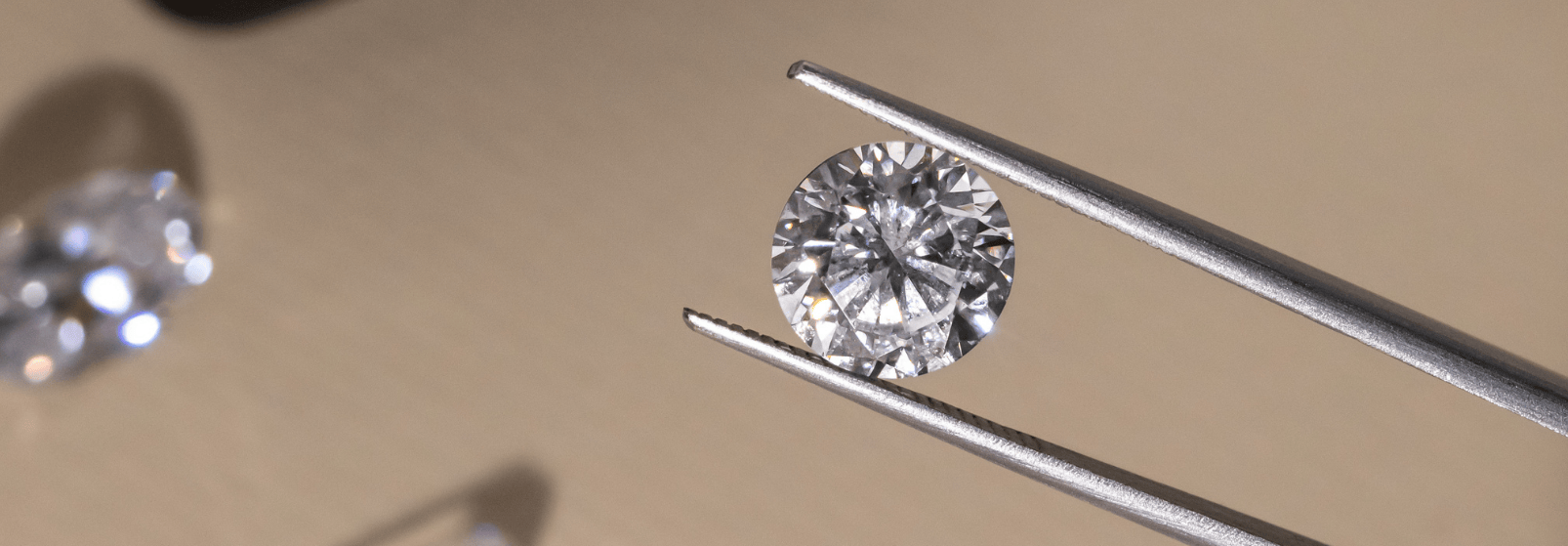
There's something quietly powerful about choosing around a round brilliant diamond. Not because it's expected. Not because it’s familiar. Not because it’s expected. But because it’s the one diamond shape that was engineered, quite literally, to perform better than anything else.
The round brilliant cut isn’t about novelty or statement. It’s about precision. Every facet exists for a reason. Every angle is calculated to control light, maximise brilliance, and return sparkle straight back to the eye.
This guide focuses on the diamond itself, how round brilliants work, why cut quality matters more here than in any other shape, and how to choose a stone that performs beautifully long before you think about settings or ring design.
Once you understand what makes a great round brilliant diamond, choosing how it’s set becomes far simpler. You can see how this cut performs across different designs in our Round Diamond Engagement Rings collection.

Topics covered:
Why the round brilliant diamond became the global standard
In 1919, The Belgian diamond cutter Marcel Tolkowsky published a thesis, this thesis changed everything. Basically he calculated the exact proportions that were needed to maximise brilliance and fire, those flashes of white and coloured light that make diamonds mesmerising. His mathematical formula became the blueprint for every round brilliant cut diamond you see today.
What Tolkowsky understood was simple: a diamond's beauty isn't inherent. It's engineered. Light enters through the table, travels through precisely angled facets inside the stone, and reflects back through the crown. Get those angles right and you create maximum light return. Get them wrong and light leaks out the bottom, leaving the stone lifeless.
That precision is why round brilliant engagement rings dominate sales. According to industry research, round cut diamonds account for roughly 60% of all diamond engagement ring purchases globally. Not because of marketing. Because of physics.

The modern appeal of something timeless
The round brilliant cut doesn't announce itself. It doesn't demand attention through shape alone. Its power sits entirely in how it handles light. That restraint feels modern. Confident. A diamond that proves itself through performance rather than novelty.
You can set a round diamond in clean platinum and it reads contemporary. Set the same stone in vintage 18ct yellow gold with milgrain detailing and it becomes an heirloom. That versatility matters. Your taste will evolve. Your life will change. A round brilliant diamond ring adapts.
Choosing a round diamond ring frees you from justifying your choice. You're simply selecting the shape that objectively performs best. That alone removes noise from your decision that can already be overwhelming. Engagement rings are a classic for a reason, and round brilliant cut engagement rings then embody that timeless elegance without feeling predictable.
Understanding the anatomy of a round diamond
Round brilliants get something no other shape does: an actual cut grade from labs like GIA. Excellent down to poor. It's official. Measurable.
With oval engagement rings or other fancy shapes? You're looking at symmetry and polish, sure, but there's no standardised grade telling you how close the cutter got to perfect. Rounds have that benchmark.
An Excellent cut means the cutter hit Tolkowsky's targets. Table between 54–57%. Crown angle between 34–35.5 degrees. Pavilion angle around 40.6–41 degrees. These aren't random. They're the exact measurements where light does what it's supposed to, enters, bounces, returns straight to your eye. That's where brilliance lives.

Why cut grade matters more than anything
A round diamond with Excellent cut but lower colour or clarity will outperform a flawless, colourless diamond with mediocre cut. Every time. Because cut determines brilliance, the white light reflecting back. It determines fire, those rainbow flashes. And it determines scintillation, the sparkle you see when the diamond moves.
Poor cut quality kills light performance. The centre goes dark. The stone looks smaller than its carat weight suggests. You lose the entire reason you're buying a diamond ring in the first place.
You can drop colour from D to G without visible difference. You can go from VVS1 to VS2 and never see an inclusion. But you cannot compromise on cut. Excellent or Very Good only. Nothing less. This applies whether you're selecting a solitaire engagement ring or a diamond halo design.
The proportions that create magic
Total depth percentage should sit between 59–62.6%. A shallower stone leaks light through the bottom. A deeper stone traps light inside, appearing dark and heavy.
Crown and pavilion angles work together. If the crown is too flat, you lose fire. If the pavilion is too deep, you get a "nail head" effect where the centre appears dark. These aren't minor details. They're the difference between a diamond that comes alive and one that sits there looking expensive but uninspired.
Round brilliant diamonds remain the gold standard for a reason - they deliver unmatched brilliance and fire while suiting every hand shape and personal style with timeless elegance.
Joe Bloggs | Senior Gemmologist & Design Expert
The four Cs for round cut diamonds: Where to Invest and where to save
The traditional 4Cs, cut, colour, clarity, and carat, all matter. But their importance isn't equal when you're buying a round brilliant cut diamond ring.
Cut: Non-Negotiable
Excellent cut is your baseline. This is where you invest first. A beautifully cut one-carat diamond will always outshine a poorly cut two-karat stone. Always. Whether you're choosing a classic solitaire or a three stone design, cut quality determines how your ring will dazzle in every lighting condition.
Colour: Context Dependent
Round brilliants hide colour better than fancy shapes like pear or cluster designs because of their symmetrical facet pattern. For platinum or white gold settings, aim for G–H. The metal's cool tone means anything lower shows warmth. For yellow gold or rose gold, you can comfortably drop to I–J. The metal masks the diamond's slight warmth beautifully.
D–F stones are genuinely colourless. No argument there. But you're paying extra for something most people won't actually see once the diamond's set. The metal changes everything. Platinum diamond settings show colour more honestly, cooler, brighter. But 18ct yellow gold? It hides warmth beautifully. Context matters more than the grade sometimes.

D–F stones are genuinely colourless. No argument there. But you're paying extra for something most people won't actually see once the diamond's set. The metal changes everything. Platinum diamond settings show colour more honestly, cooler, brighter. But 18ct yellow gold? It hides warmth beautifully. Context matters more than the grade sometimes.

Clarity: Where you save strategically
Round brilliant cut diamonds forgive clarity issues exceptionally well. All those facets, 57 or 58 depending on whether there's a culet, create enough brilliance to hide small inclusions. VS2 to SI1 is the value sweet spot for natural diamonds. VVS2 to VS1 for lab-grown.
Check the GIA certificate to ensure inclusions sit away from the table, the large top facet where they'd be most visible. Under the crown or near the girdle? Invisible in daily wear. Dead centre under the table? You might see it with the naked eye depending on inclusion type.
Avoid clouds and strong twinning wisps, even in SI1 stones. They can make the diamond appear hazy, reducing brilliance despite decent paper grades. This is why viewing high-resolution images or video matters. Certificates tell part of the story. Your eyes finish it.
Carat Weight: Emotional vs visual
Carat weight measures mass, not size. A well-cut round brilliant diamond faces up proportionally to its weight. A poorly cut stone hides weight in depth, looking smaller than its carat rating suggests.
Consider cut quality first, then determine carat weight within your budget. A 0.90-carat Excellent cut diamond costs noticeably less than 1.00 carat because of psychological pricing thresholds, but the size difference is negligible. Strategic purchasing around these thresholds maximises value while maintaining exceptional visual impact.
How a round brilliant diamond performs once set
A round brilliant diamond is uniquely forgiving once set. Its symmetrical facet pattern allows light to return evenly from almost any angle, which is why it performs consistently across a wide range of ring designs.
What matters most is not the style of the setting, but whether the diamond is elevated enough to allow light to enter freely and return through the crown. Settings that sit too low or restrict light around the pavilion can mute brilliance, even in a well-cut stone.

This is why round brilliants are so often chosen as centre stones, they adapt easily. Whether placed in a minimal solitaire or a more detailed design, the diamond itself remains the visual anchor.
For readers exploring design options, round brilliant diamonds are commonly paired with classic solitaire, pavé, and halo settings.
Once you’ve chosen the right diamond, the next step is selecting a setting that complements it, our round diamond engagement ring collection shows how this cut performs across different designs.
Round vs other shapes: What you're actually choosing
Every diamond shape carries different energy. Choosing a round brilliant cut diamond over other shapes isn't about which is objectively better. It's about what resonates with you. When you browse engagement rings online or visit a jeweller, understanding these distinctions helps clarify your instincts.
Round vs Oval: Structure vs Flow
Oval diamonds feel more fluid, more artistic. They elongate the finger and appear larger than round diamonds of equivalent carat weight. But they also require more careful evaluation, no standardised cut grade, bow-tie effects, varied proportions. Round cut diamonds are straightforward. You know what you're getting.
If you want maximum sparkle with minimum complication, round brilliant diamond engagement rings win. If you want distinctive elegance with vintage undertones, consider oval engagement rings.
Round vs Cushion or Emerald: Brilliance vs Sophistication
Cushion cuts offer soft, romantic sparkle with larger facets that create a "crushed ice" or "chunky" light pattern. Emerald cuts are step cuts, minimal fire, maximum sophistication. They show colour and clarity more readily, requiring higher grades. Some cluster designs incorporate mixed shapes for unique visual interest.
Round brilliant cuts deliver brilliance. Cushions deliver romance. Emeralds deliver elegance. It's not about quality. It's about personality. Consider too that shapes like pear and sapphire accents work beautifully alongside round centre stones in more complex designs.

Key Takeaways
➤ Round brilliant cut diamonds achieve unmatched light performance through mathematically optimised proportions developed over a century of refinement
➤ Cut grade is the most critical factor, Excellent or Very Good cuts dramatically outperform lower grades regardless of colour or clarity
➤ Strategic budget allocation means investing in cut first, then selecting colour based on metal choice (platinum, white gold, yellow gold, or rose gold) and clarity in the VS2–SI1 range for maximum value
➤ Settings should amplify the diamond's brilliance, classic solitaire engagement rings offer timeless simplicity while halo ring and pavé designs add architectural presence
➤ Round brilliant engagement rings cost more per carat than fancy shapes but deliver superior and more predictable brilliance with simplified selection
➤ The round brilliant cut's versatility means it can adapt to many styles, from contemporary minimalism to the vintage romance
FAQ's

Why are round diamond rings more expensive than other shapes?
Round brilliants require cutting away more rough diamond than fancy shapes, often losing over 50% of the original crystal to achieve ideal proportions. That material loss, combined with higher demand, means round cut diamonds cost 10–30% more per carat than ovals, cushions, or emeralds of comparable quality. The premium reflects both the exceptional craftsmanship required and the superior light performance achieved.
Is $3,000 a good budget for an engagement ring?
Yes, absolutely. With £2,500–£3,000 (roughly $3,000), you can find a beautiful round brilliant diamond engagement ring. Expect approximately 0.50–0.70 carat in a mined diamond with good colour (H–I) and clarity (VS2–SI1), or 0.80–1.20 carat if choosing lab-grown. Prioritise cut quality (Excellent grade) over size, a brilliantly cut 0.60 carat will outshine a poorly cut 0.80 carat every time. Consider classic solitaire or cathedral settings to maximise your budget.
Is a round brilliant diamond worth the higher price?
For many buyers, yes. Round brilliant diamonds offer the most consistent and predictable light performance of any shape. Because they’re mathematically optimised and graded for cut quality, buyers face fewer compromises and less risk. If sparkle, versatility, and long-term satisfaction matter more than maximum size per carat, the premium is often considered worthwhile.
What size round diamond looks big on the hand?
A well-cut round diamond between 0.70–1.00 carat often appears larger than its weight suggests due to balanced proportions and strong light return. Cut quality matters more than raw carat weight, an Excellent cut 0.80 carat can visually outperform a poorly cut 1.00 carat stone.
What does a circle diamond ring mean?
A circle or "eternity" band symbolises eternal love and commitment. These rings feature diamonds (often round brilliants) set continuously around the entire band, representing love without beginning or end. Full eternity bands have stones all the way around, while half-eternity bands feature diamonds across the top half only (more practical for sizing). Many couples choose eternity bands as wedding rings, anniversary gifts, or to complement their engagement ring in a stacked set.
What cut is Taylor Swift's ring?
Taylor Swift has worn different rings over the years, but searches likely refer to celebrity engagement ring styles similar to hers. When choosing your own round brilliant, focus on what suits your personal style and hand rather than replicating celebrity pieces. However, if you love the classic look seen on many celebrities, a solitaire setting with a round brilliant diamond in the 1.50–3.00 carat range offers that timeless, elegant aesthetic.
Is a VS1 or VS2 better?
VS1 has slightly fewer or less visible inclusions than VS2, but both grades are generally "eye-clean" meaning inclusions aren't visible without magnification. For round brilliant diamonds, VS2 offers excellent value because the cut's brilliance masks minor inclusions effectively. Save the difference and invest in better cut or colour instead. Only consider VS1 or higher if you're buying a very large diamond (2.50+ carats) where inclusions become more noticeable, or if you have specific concerns after viewing the stone.




Need help choosing ?
We're happy to help