27 Jan 2026 — by Flawless Fine Jewellery — Reading time 12 minutes
The Cushion Cut Diamond Guide
A guide to cushion cut diamonds, exploring their romantic charm, sparkle, and ideal engagement ring styles.
The Cushion Diamond Guide
What You'll Learn
Why cushion cut diamonds deliver romantic vintage charm with modern light performance
How modified brilliant and crushed ice facet patterns create dramatically different visual effects
Where to invest across the Four Cs to maximise a cushion cut diamond's brilliance
Which engagement ring settings enhance a cushion cut's distinctive pillow-shaped elegance
How cushion cut diamonds compare to rounds and ovals in pricing, size perception, and emotional appeal

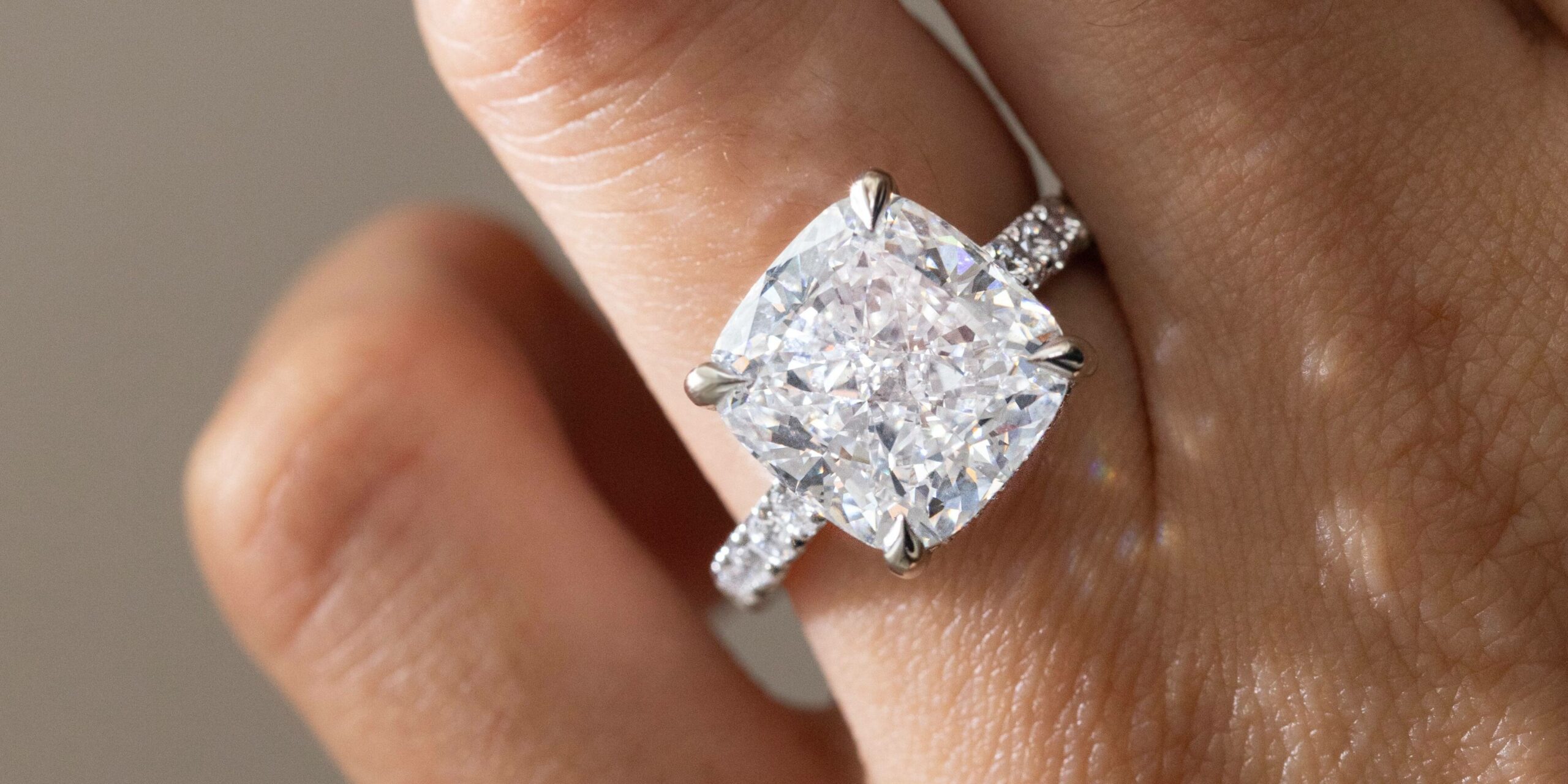
There’s a softness to a cushion cut diamond that stops you for a second. Not the fragile kind. More like the glow of candlelight at the edge of a room. Or the weight of a handwritten note you didn’t expect to keep.
This is a shape that doesn’t compete for attention. It doesn’t flash first and ask questions later. It sits there quietly, letting the light do its thing, slowly, generously, until you realise you’re still looking.

For couples caught between wanting something timeless and wanting something that feels unmistakably theirs, the cushion cut lives comfortably in that overlap. Rounded corners. Broad facets. A sense of history you can almost feel, like stones that have already lived a life before they reached you. Substantial. Thought-through. Chosen with intent.
This guide stays with the diamond itself. How cushion cuts are formed. How different facet styles change the way light moves across the surface. What actually matters when you’re choosing a stone, long before settings or metal enter the conversation.
Once you get a feel for the character of a cushion cut diamond, everything else starts to click. Seeing how that softness translates into design becomes intuitive rather than overwhelming. If you want to explore how the shape behaves across different styles, you can see it in our Cushion Diamond Engagement Rings collection.
- Why Cushion Cut Diamonds Have Captured Modern Romance
- Understanding Cushion Cut Anatomy: Modified Brilliants Vs Crushed Ice
- The Four Cs for Cushion Cut Diamonds: Where Quality Shows Most
- How Cushion Cut Diamonds Translate Into Different Settings
- Cushion vs Other Shape: What You're Really Choosing
- Key Takeaways
- FAQ's
Why Cushion Cut Diamonds Have Captured Modern Romance
The cushion cut isn't new. It goes back centuries, rooted in the old mine cut, a hand-cut style that dominated the 1800s. Those early cushions had big facets, high crowns, small tables. They were designed for candlelight, not electric bulbs. According to gemological research, cutters back then chased fire, those coloured flashes, more than the white brilliance we're obsessed with now.
Modern cushions changed when technology caught up. Cutters started applying brilliant-cut faceting to that soft, rounded square outline. Kept the vintage feel. Massively improved the light return. You end up with a shape that sits comfortably in both centuries.
It looks like it belongs in a vintage setting but performs optically like a contemporary cut diamond.
Why Cushions Resonate Now?
There's been a genuine shift away from engagement rings that all look identical. Couples want rings that feel personal, distinctive, chosen rather than prescribed. The cushion cut delivers that difference without feeling costume-y or overly trend-driven.
Cushion cut diamond rings also photograph beautifully. Those soft, pillow-shaped edges and larger facets create dimension and depth that translates exceptionally well in images. In an era where engagement rings live on social media as much as they live on hands, that visual presence matters.

Here's where cushion cut diamonds get interesting: they're not a single cut style. The term "cushion" describes the overall shape, those soft, pillow-like edges, but the internal faceting can vary dramatically. The two primary styles are modified brilliant and crushed ice, and they look and perform completely differently
Modified Brilliant: Chunky Light Performance
Modified brilliant cushion cuts feature large facets arranged in a pattern that creates broad, distinct flashes of light. When you move the diamond, you see individual sparkles, bold and clear. Some people describe it as "chunky" brilliance. The facet pattern typically includes four main pavilion facets under the table, creating a distinctive appearance when you look straight down into the stone.
This style appeals to people who want visible light return. The sparkle isn't frenetic. It's measured. Confidence. You see each flash of brilliance distinctly. Modified brilliants also tend to show more fire, those rainbow colours, because the larger facets disperse light more dramatically. This characteristic makes them a perfect cushion for those seeking timeless charm with personality.
Crushed Ice: Dispersed Brilliance
Crushed ice cushion diamonds use additional facets, sometimes dozens more, to break light into smaller, more dispersed sparkles. The effect resembles crushed ice or scattered diamonds rather than bold individual flashes. When the stone moves, the entire surface seems to shimmer rather than flash in distinct patterns, creating extra sparkle across the entire gem.
Crushed ice appeals to people who want maximum overall brilliance. The diamond appears uniformly bright from edge to edge, with fewer dark areas or contrast. It's a more contemporary interpretation of the cushion cut, prioritising consistent sparkle over dramatic light patterns.
Proportions That Matter
Cushion cut diamonds don't get official cut grades the way round and princess cut diamonds do. No Excellent or Very Good stamp from the lab. You're evaluating proportions yourself, which means paying closer attention.
Table percentage should sit between 58–62%. Depth percentage works best between 62–68%. Total depth runs slightly higher than rounds because of the cushion's structure.
Look for excellent or very good symmetry and polish grades. These indicate precise cutting, which directly affects how light moves through the stone. Even with ideal proportions, a poorly-cut cushion will show dark centres or light leakage. Any cushion-cut diamond you consider should be certified to verify quality standards.
The Four Cs for Cushion Diamonds: Where Quality Shows Most
Cushion cuts reveal certain quality factors more readily than rounds. Understanding where to invest and where you can save makes the difference between a stone that performs beautifully and one that disappoints.
Colour: Cushions Show It More
Cushion cut diamonds retain more colour than round brilliants because of their larger facets and different light paths. If you want a truly colourless appearance, aim for G or higher. For can drop to I–J without visible warmth because the metal tone disguises the diamond's slight colourplatinum or white gold settings, stay G–H minimum. For 18ct yellow gold or rose gold, you .
Fancy colour cushion diamonds, yellows, pinks, blues, actually work exceptionally well in this shape. The larger facets and slower light return intensify colour rather than dispersing it. If you're considering a fancy colour gemstone or diamond, cushions amplify what makes coloured stones compelling.
Clarity: Still Forgiving
Cushion cut engagement rings mask inclusions reasonably well thanks to their brilliant faceting, though not quite as effectively as rounds. VS2 to SI1 remains a safe clarity range for natural diamonds. VVS2 to VS1 for lab grown diamond options.
Check inclusion placement carefully. Under the table is most visible. Near the corners or under the crown facets typically hides well. Avoid clouds or strong graining, as cushion diamonds with slower light return can amplify haziness.


Cut Quality Without a Grade
Since cushions lack standardised cut grades, you're evaluating through observation rather than certificate data. Request high-quality video or view the diamond in person. Watch how light moves across the stone as it rotates. A well-cut cushion shows even light return from edge to edge with minimal dark areas. A poorly cut cushion goes dark in the centre or corner regions, with light escaping through the pavilion.
Look for length-to-width ratios between 1.00–1.05 for square diamond proportions, 1.15–1.30 for elongated cushion cut diamond shapes. Personal preference matters here, but those ranges offer balanced proportions that feel neither too square nor overly elongated. These proportions apply whether you're choosing a pillow cut diamond or more rectangular cushion style.
Carat Weight: Visual Presence
Cushion cuts look smaller than oval engagement rings at the same carat weight. They carry more mass below the surface, more depth, less face-up area. A one-carat cushion shows about as much surface as a 0.90-carat oval.
Still, cushion diamond rings feel more substantial than emerald or Asscher cuts. All that brilliant faceting creates presence through movement. Through sparkle. It reads as bigger even when it technically isn't.
How Cushion Cut Diamonds Translate Into Different Settings
The cushion cut’s soft outline and broad facets behave differently depending on how the diamond is set.
Solitaire Settings: Let the Cut Speak
A four-prong solitaire works beautifully with cushion cuts. Minimal metal. Maximum light entry from every angle. Six prongs give you more security, sure, but they also start hiding the shape, making it read rounder than it actually is. You lose that pillow silhouette.
Choose based on priority: visual purity or maximum security.
Halo Settings: Amplifying Romance
Cushion cut diamond engagement rings practically demand halo settings. The shape naturally accommodates a diamond halo, and the added sparkle from the surrounding smaller diamonds increases perceived size dramatically. Square halos maintain the cushion's geometric integrity. Rounded halos soften the look further, creating an almost romantic blur between the centre stone and setting.


Side Stones and Shoulder Details
Diamond shoulders, side stones set along the band's shoulder leading to the centre stone, work beautifully with cushion cut engagement rings. They create visual flow while adding sparkle that enhances rather than competes. Three-stone designs with smaller cushion diamonds or round brilliants flanking the centre carry symbolism, past, present, future, while creating balanced composition.
The craft of setting side stones requires precision. Too prominent and they overwhelm the centre cushion. Too minimal and they disappear. The perfect ring balances these elements so your eye naturally moves from band to shoulders to centre stone in one fluid motion.
Vintage and Art Deco Designs
Cushion cuts excel in vintage-inspired settings. Art Deco designs with geometric metalwork, milgrain detailing, and filigree echo the cut's historical roots while feeling surprisingly modern. These settings work because they're honest about what the cushion cut represents: a bridge between eras.
Cushion vs Other Shapes: What You're Really Choosing
Every diamond shape carries distinct energy. Understanding what differentiates cushion cut diamonds from other cuts helps clarify whether this shape truly resonates with you. Seeing cushion cut diamonds across different settings helps clarify how metal, proportion, and design influence the same stone.
Cushion vs Round: Character vs Perfection
Round brilliants deliver maximum light performance through mathematical precision. Cushion cuts trade some of that objective perfection for character and individuality. Rounds sparkle more consistently and predictably. Cushion diamonds sparkle with more personality, more variation, more visual interest.
Rounds feel universal. Cushion cut rings feel personal. If you want a diamond that performs flawlessly in every situation, choose a round. If you want a diamond that rewards attention, that reveals different qualities depending on light and angle, choose a cushion.
Cushion vs Oval: Soft vs Flowing
Both shapes offer alternatives to the round brilliant while maintaining strong light return. Oval diamonds elongate the finger and appear larger per carat. Cushion engagement rings feel more substantial and grounded, with soft edges that suit various hand shapes without the directional emphasis ovals create.
Ovals move with more visual flow. Cushions anchor with soft strength. Choose based on whether you want your diamond to guide the eye along your finger or simply glow where it sits.


Cushion vs Radiant: Similar Yet Different
Radiant cuts share the cushion's basic outline with trimmed corners but feature completely different faceting. Radiants use a brilliant pavilion combined with step-cut crown facets, creating a hybrid sparkle pattern. Cushion cuts maintain traditional brilliant faceting throughout. Radiants feel more contemporary and geometric. Cushions feel softer and more romantic.
Both shapes work beautifully in similar settings, but radiant cuts show slightly more brilliance while cushions offer more fire and vintage charm.
Cushion vs Emerald or Asscher: Fire vs Elegance
Step cuts like emerald and Asscher offer sophisticated, mirror-like facets that prioritise clarity and transparency over sparkle. Cushion cut diamonds deliver fire, movement, and brilliance. Step cuts whisper elegance. Cushions sing romance.
If you value understated sophistication and are willing to invest in higher clarity grades, consider step cuts. If you want a diamond that actively catches light and creates sparkle, cushion cut diamond engagement rings deliver that energy while maintaining softer, more approachable aesthetics than rounds.
The Pricing Advantage
Cushion diamonds typically cost 20–30% less per carat than comparable round brilliants. The cutting process retains more of the rough diamond, reducing waste and therefore cost. you can afford a larger carat weight, or you can invest those savings into higher colour, clarity, or setting quality. This makes cushion cut diamond rings an intelligent choice for budget-conscious couples seeking maximum impact.
Key Takeaways
- Cushion cut diamonds blend vintage charm with modern light performance through varied facet patterns
- Modified brilliant cushion cuts offer bold, chunky sparkle while crushed ice styles provide uniform, dispersed brilliance
- Cushion diamonds show colour more readily than rounds, prioritise G or higher for colourless appearance, I–J works in warm metals
- Excellent symmetry and balanced proportions matter more than standardised cut grades for cushion cut engagement rings
- Halo settings and vintage-inspired mountings complement cushion cuts naturally, amplifying their romantic presence.
- Cushion cut diamonds cost 20–30% less than comparable rounds while offering distinctive character and strong light return
- Side stones and diamond shoulders enhance cushion engagement rings without competing with the centre stone
FAQ's
Are cushion cut diamonds cheaper than round brilliants?
Yes. Cushion cuts cost 20–35% less per carat than round brilliants of comparable quality. This price difference reflects two factors: cushion cuts retain more rough diamond during cutting (losing about 40–50% versus 50%+ for rounds), and they have lower market demand. This makes cushion cut engagement rings an excellent value choice, you get a larger, more distinctive diamond for your budget without sacrificing brilliance or beauty.
What cut is Meghan Markle's ring?
Meghan Markle's engagement ring features a cushion cut diamond as the centre stone, flanked by two round brilliant diamonds in a three-stone setting. The cushion cut was sourced from Botswana, a country special to Prince Harry. Her ring showcases why cushion cuts are so beloved, the soft, romantic shape balances vintage elegance with modern sophistication. The three-stone design has become increasingly popular since her engagement, particularly with cushion centre stones.
How much does a 2.5 carat cushion cut diamond cost?
A 2.50 carat cushion cut diamond typically ranges from £6,000–£25,000+ depending on quality. For excellent specifications (G–H colour, VS2–SI1 clarity, good proportions), expect £12,000–£18,000. Lab-grown cushion diamonds of this size cost £3,500–£7,000, offering substantial savings. Always view the stone to assess bow-tie effect and faceting style, cushions vary significantly in appearance, and personal preference matters more than specifications alone.

What is special about a cushion cut diamond?
Cushion cuts combine romantic vintage appeal with modern brilliance. Their soft, pillow-like shape with rounded corners creates a gentle, feminine aesthetic that stands out from sharper shapes. The faceting pattern delivers chunky flashes of coloured light (fire) rather than uniform sparkle, giving each stone unique character. Cushion cuts have been beloved for over 200 years, making them both timeless and currently trending, especially in halo settings and three-stone designs.
What's the difference between cushion and oval diamonds?
Cushion cuts are square to slightly rectangular with rounded corners and a pillow-like appearance, while ovals are elongated with smooth, curved edges. Ovals create a lengthening effect on fingers and face up larger for their carat weight, but cushion cuts deliver more fire and vintage romance. Ovals show more prominent bow-tie effects, while cushions have subtler shadows. Choose oval for finger elongation and modern elegance; choose cushion for character and timeless charm.
Are lab-grown cushion cut diamonds a good choice?
Absolutely. Lab-grown cushion cut diamonds are chemically and optically identical to mined cushions, offering the same brilliance, fire, and romantic character at 60–80% lower cost. This price advantage is particularly valuable for cushion cuts, allowing you to afford a significantly larger stone or higher quality (better colour and clarity) within the same budget. The savings make 2.00–3.00 carat cushion cuts accessible to many more buyers without compromising on beauty or durability.
Do cushion cut diamonds have a cut grade?
No. GIA and other labs don't provide cut grades for cushion diamonds (or any fancy shapes) like they do for rounds. You must evaluate cushion cuts manually by examining length-to-width ratio (1.00–1.10 for square, 1.15–1.30 for rectangular), table percentage (58–68%), depth (60–70%), and most importantly, visual performance through photos and video. Look for even light return, minimal bow-tie, and faceting style that appeals to you. This requires more research but ensures you find a truly exceptional stone.




Need help choosing ?
We're happy to help