Create Your Ring
1
Select Setting

2
Select Lab Diamond

3

Yellow Gold Princess Cut Engagement Rings
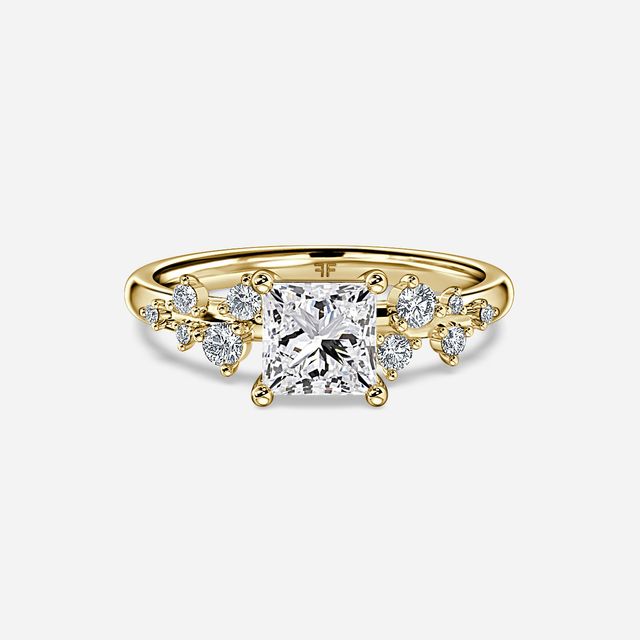
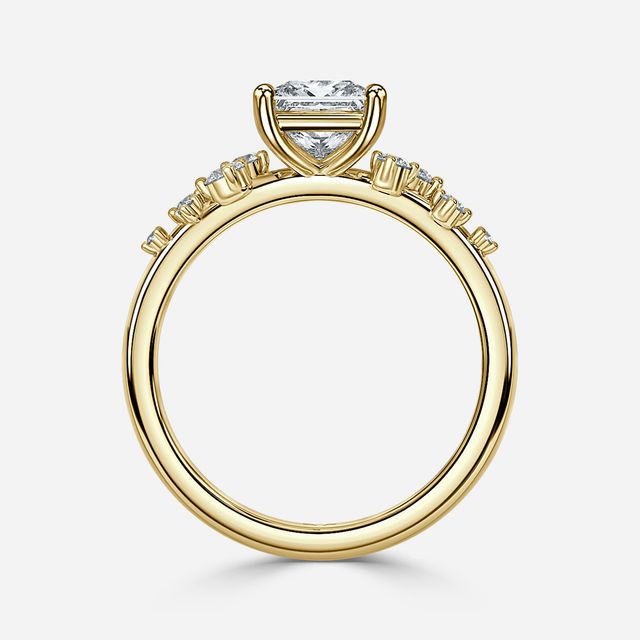
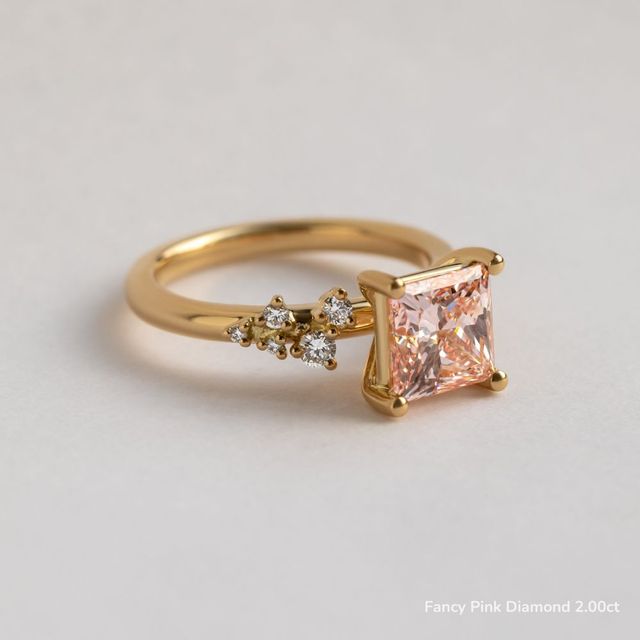
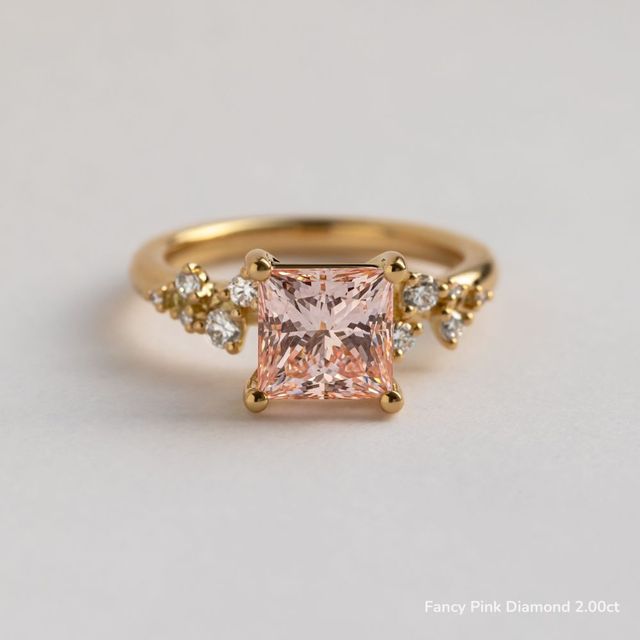
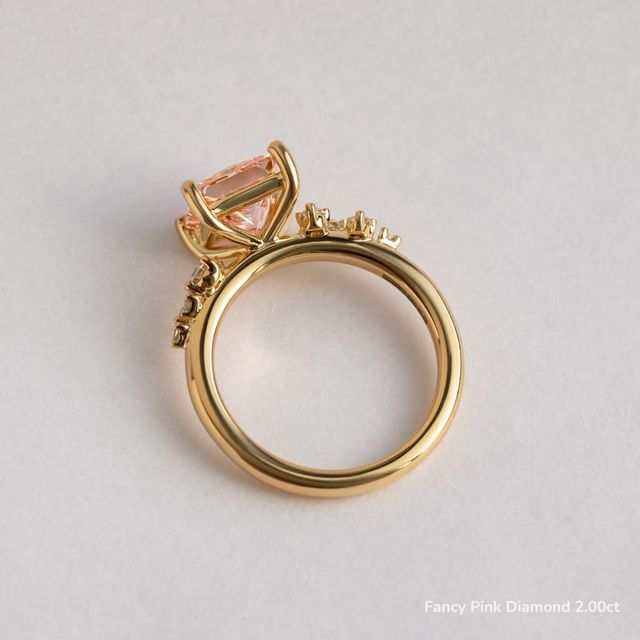
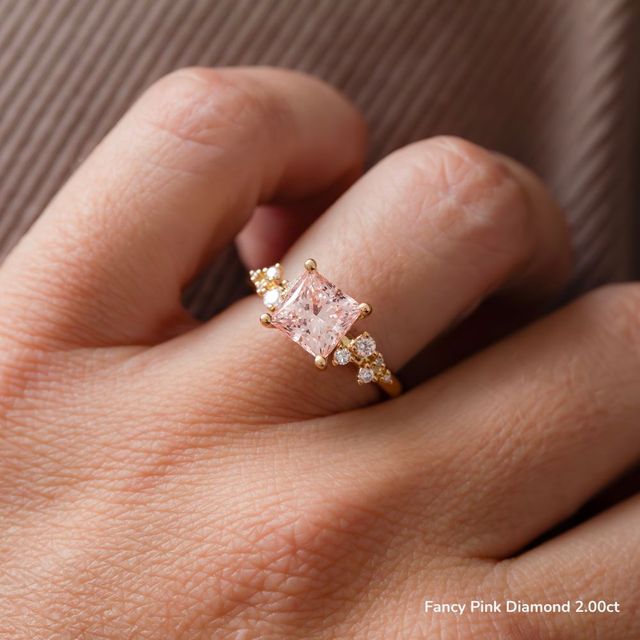
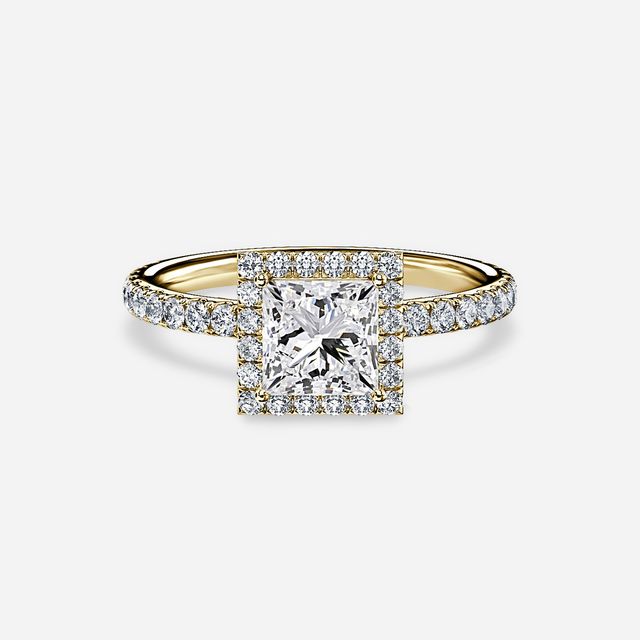
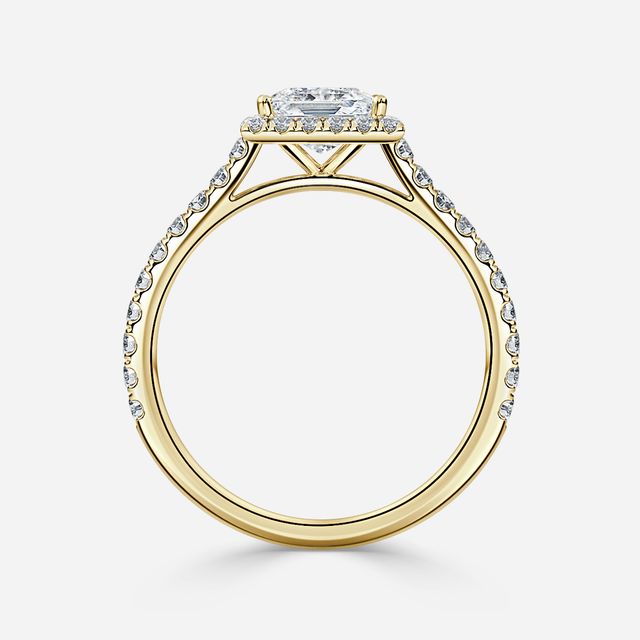
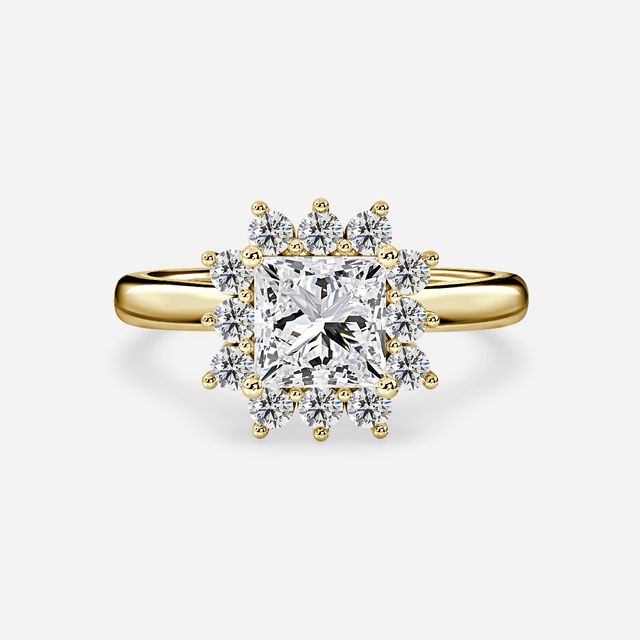
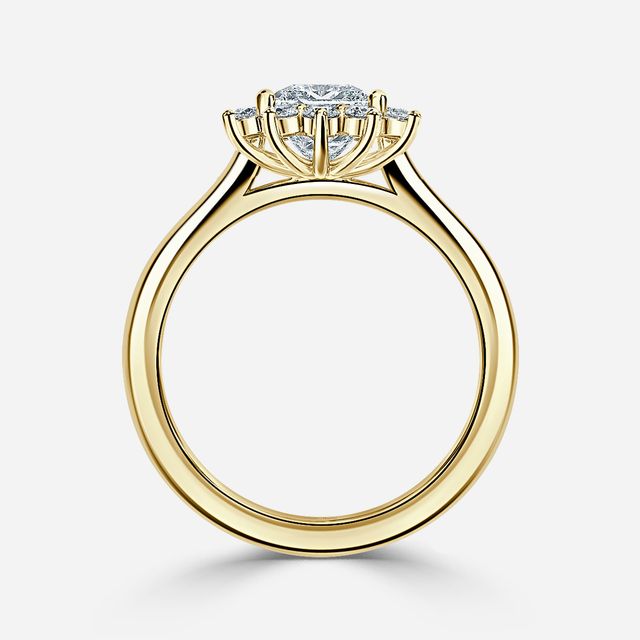
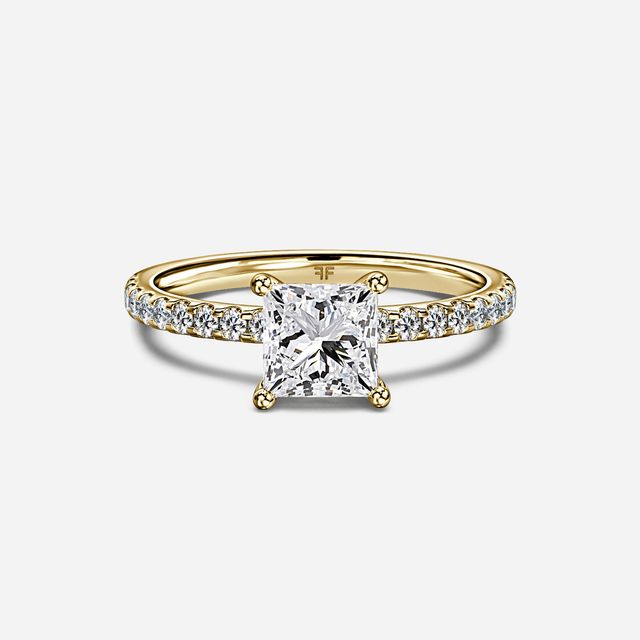
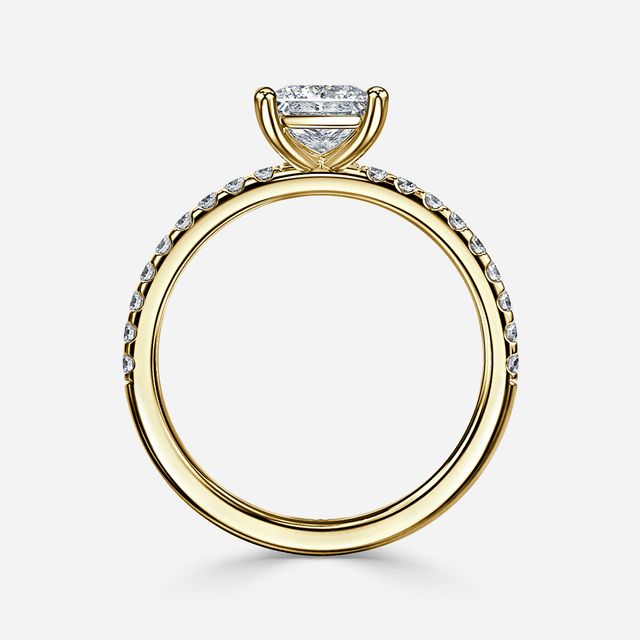
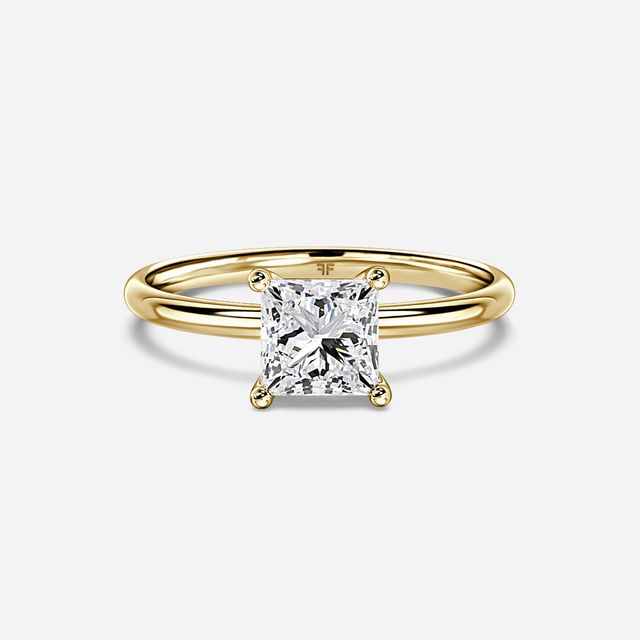
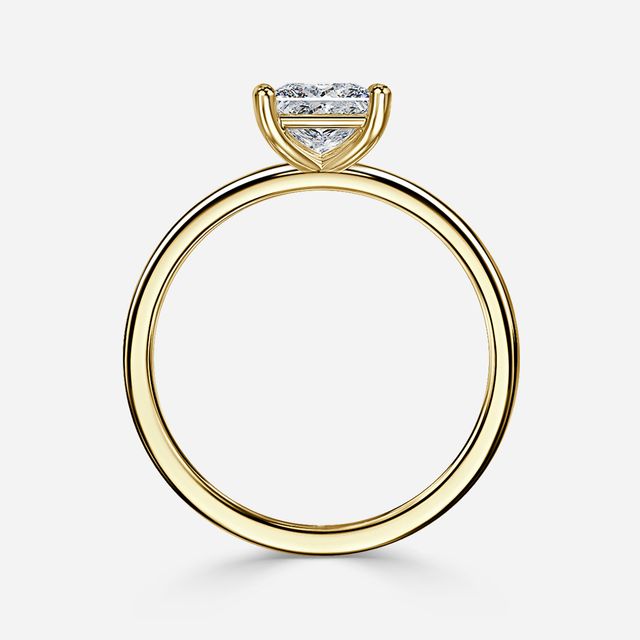
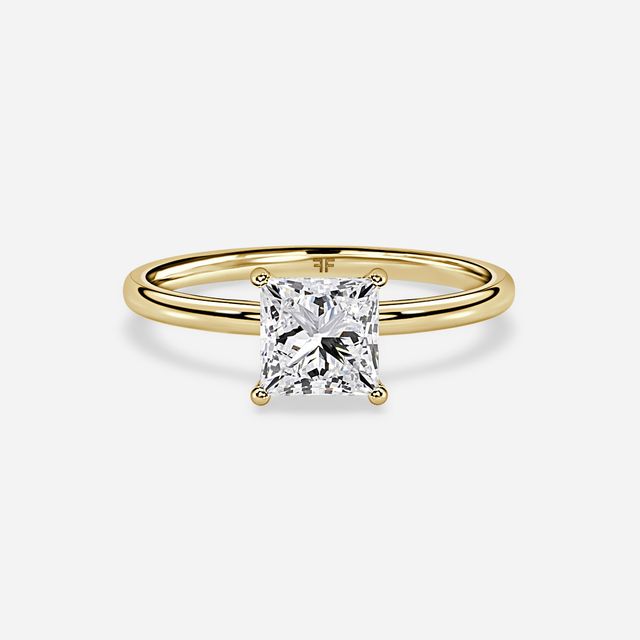
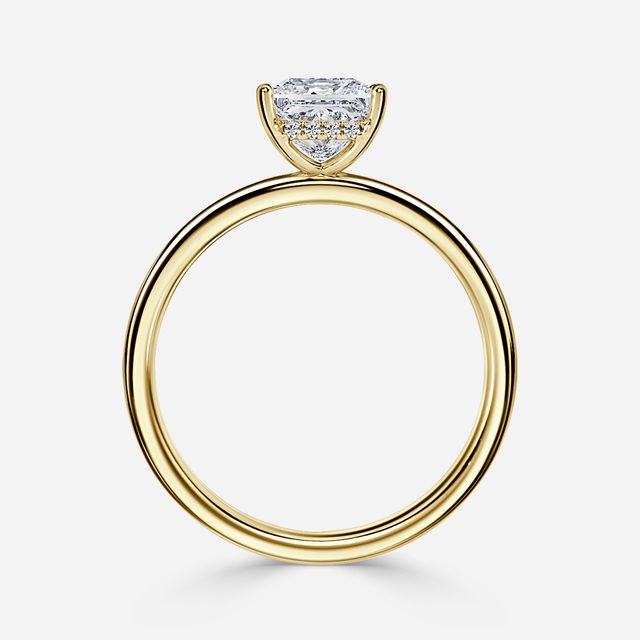
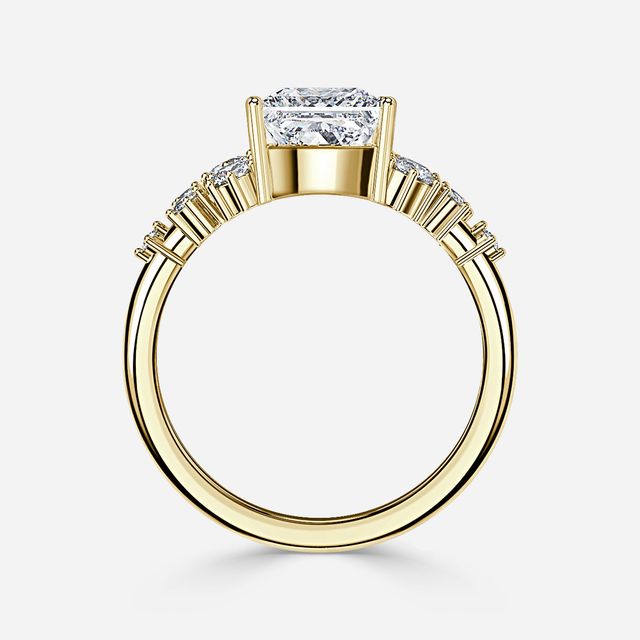
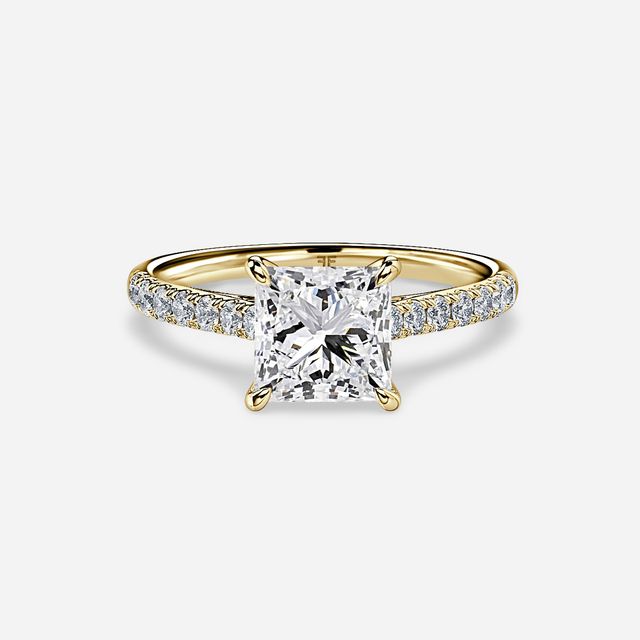
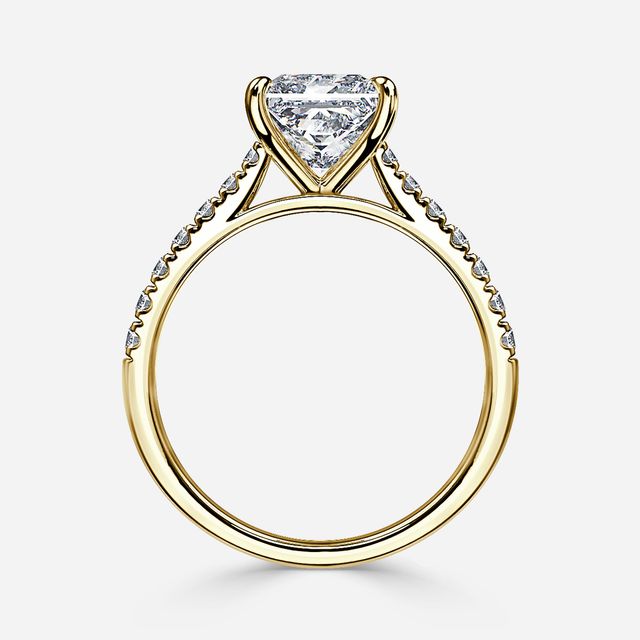
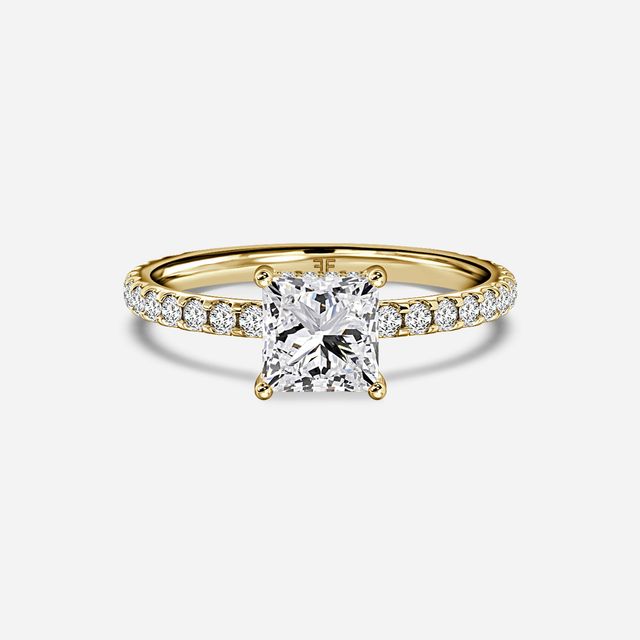
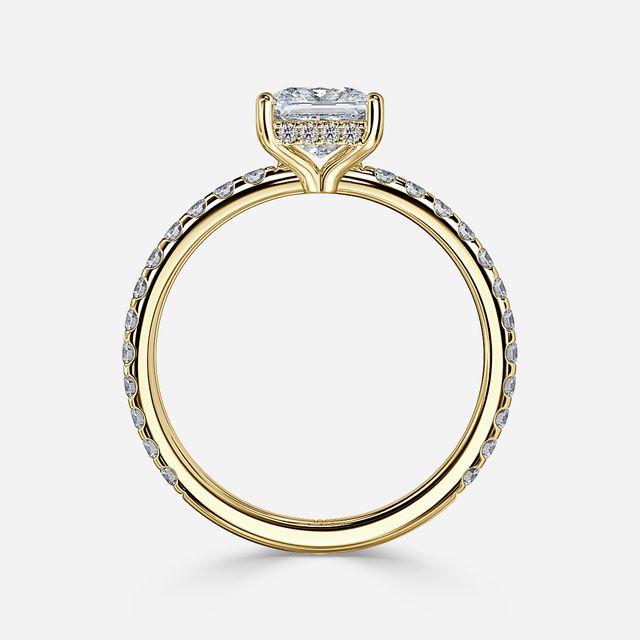
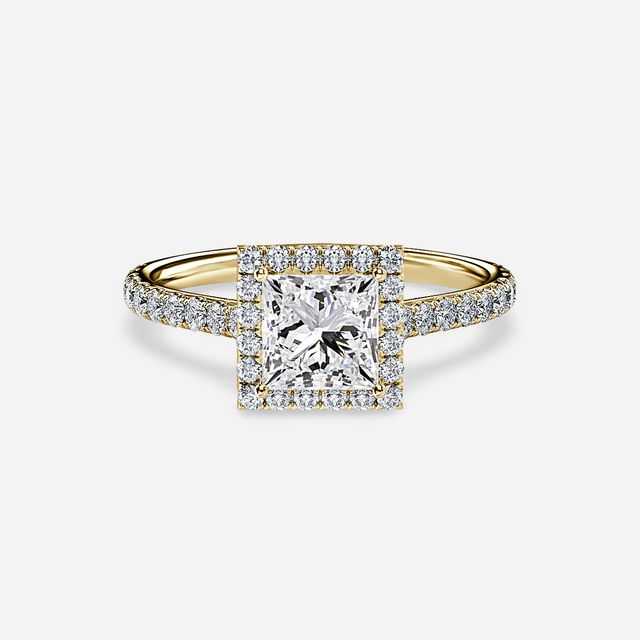
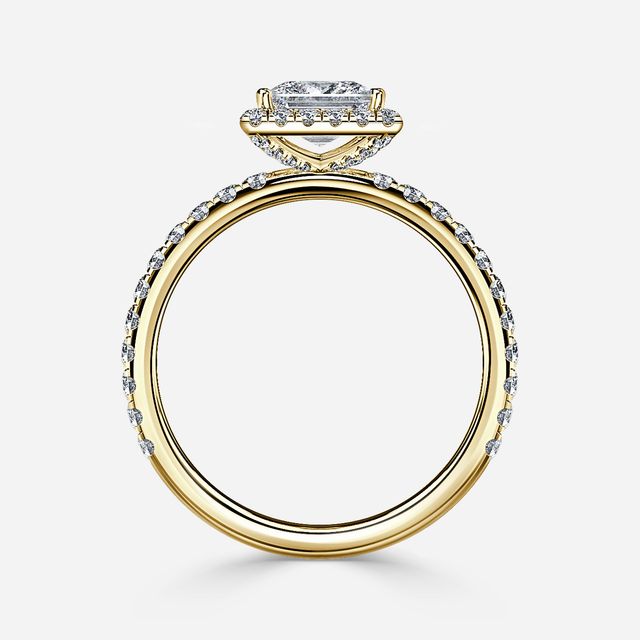
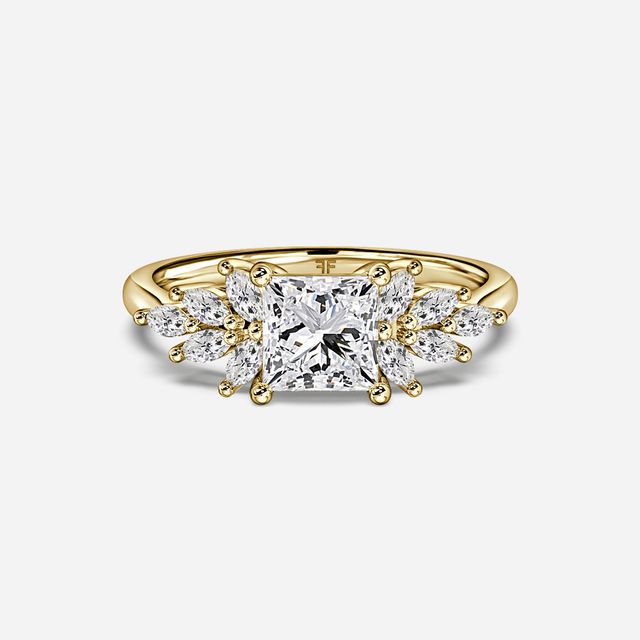
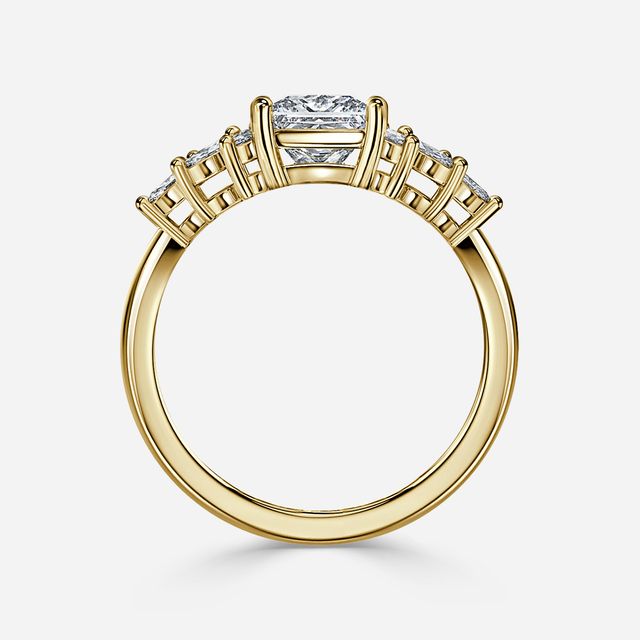
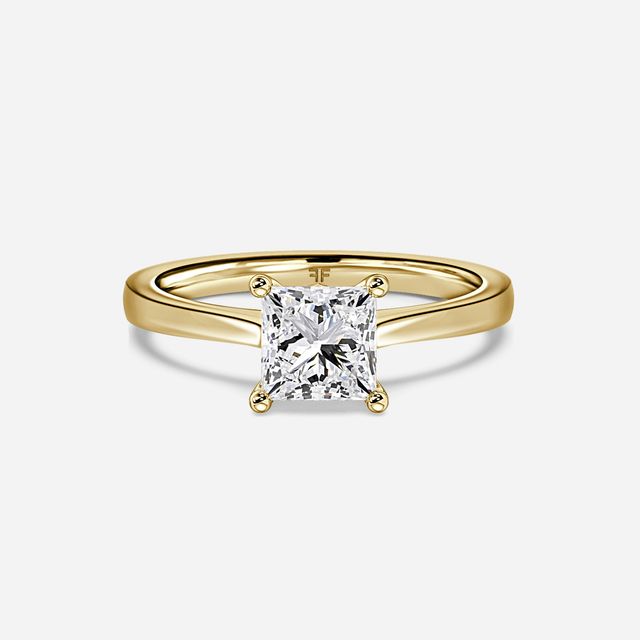
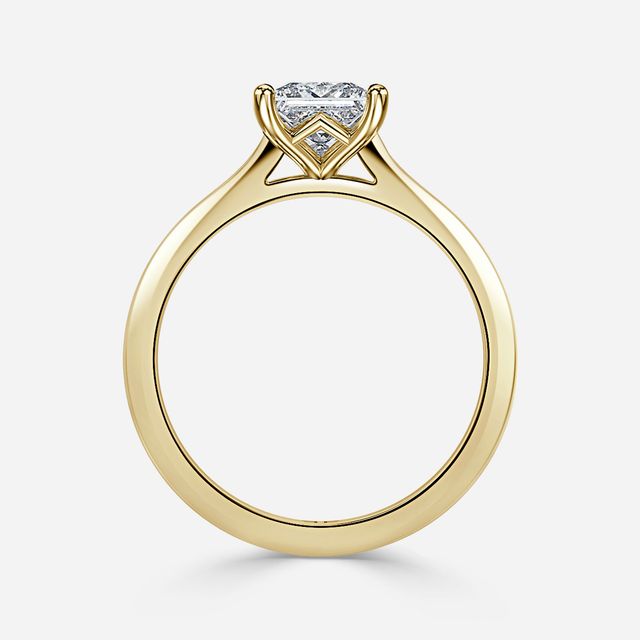
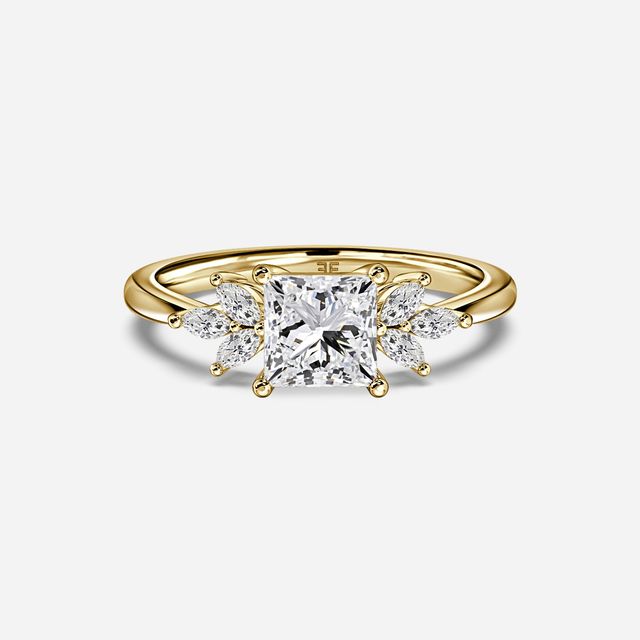
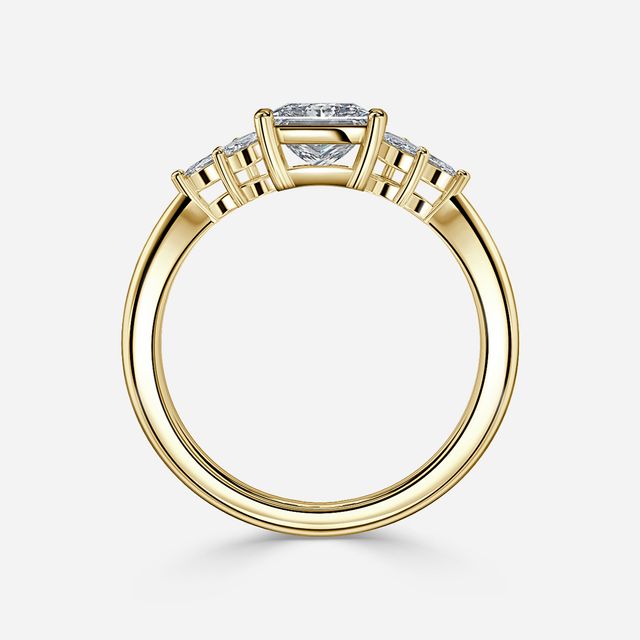
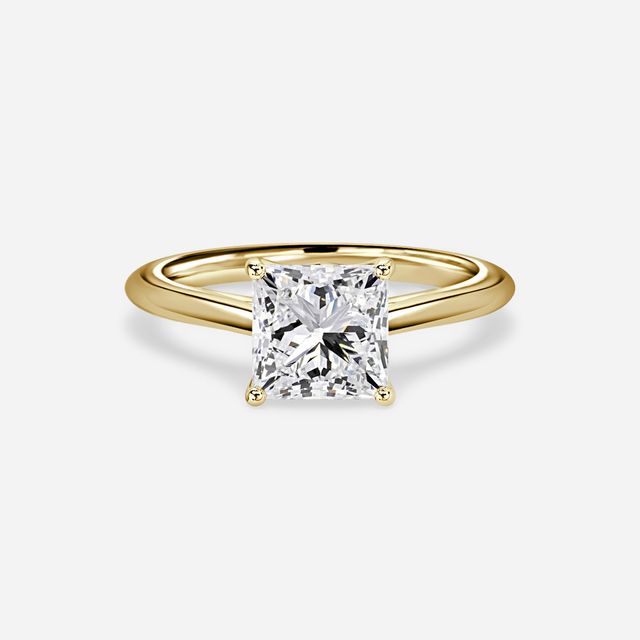
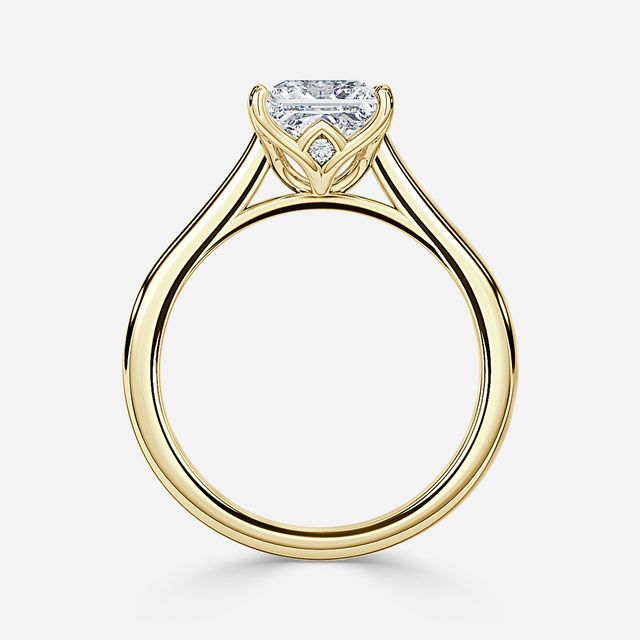
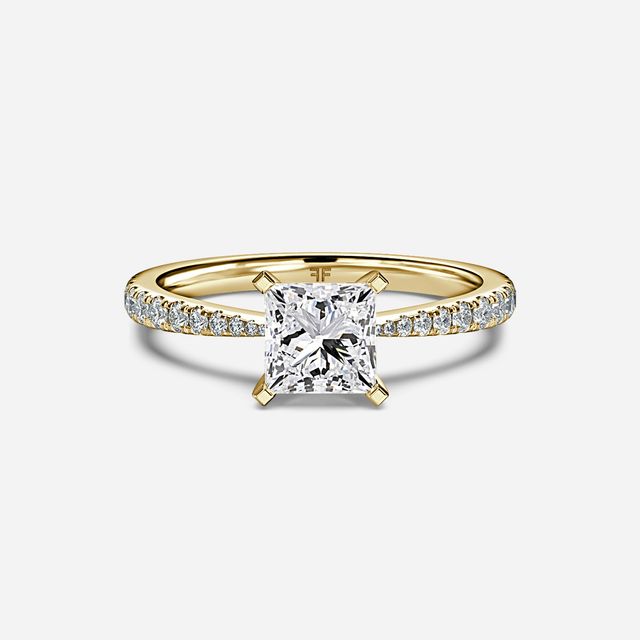
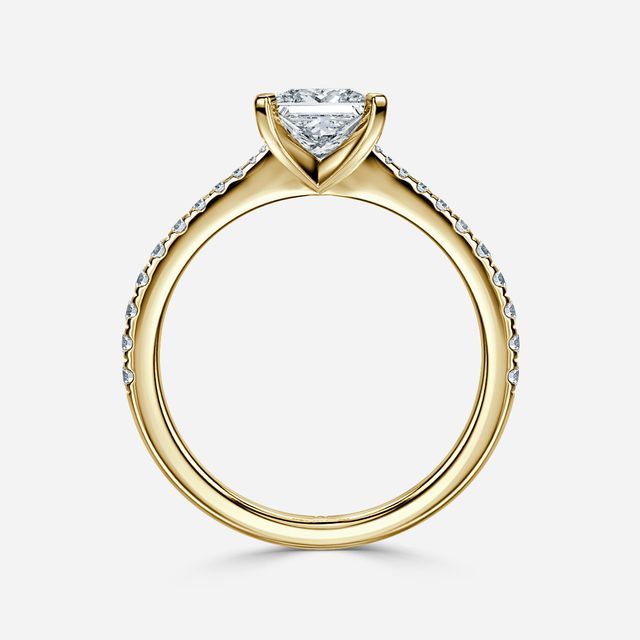
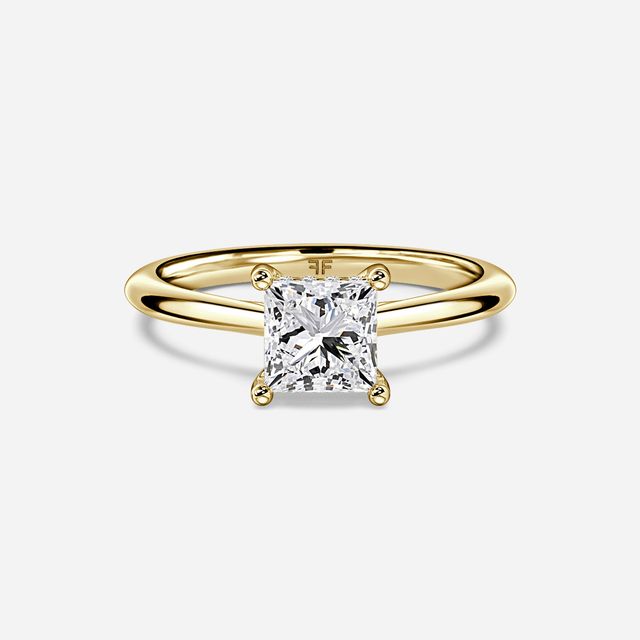
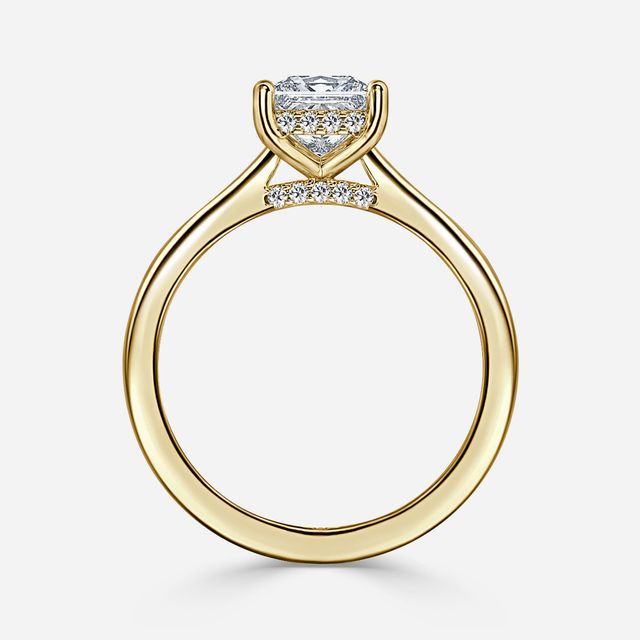
Yellow gold princess cut engagement rings bring together a classic metal and a sharp, modern diamond shape. Princess cut diamonds, developed in the 1960s, use a square outline with brilliant-style facets that produce strong sparkle and help mask minor inclusions. Set in 18k yellow gold, the diamond’s edges appear well-defined against the warm tone of the band. For daily use, this combination provides dependable strength and a structured appearance.
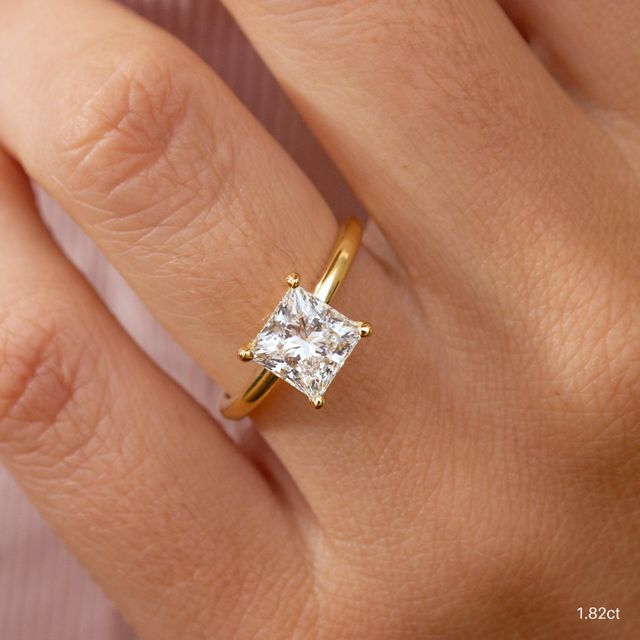
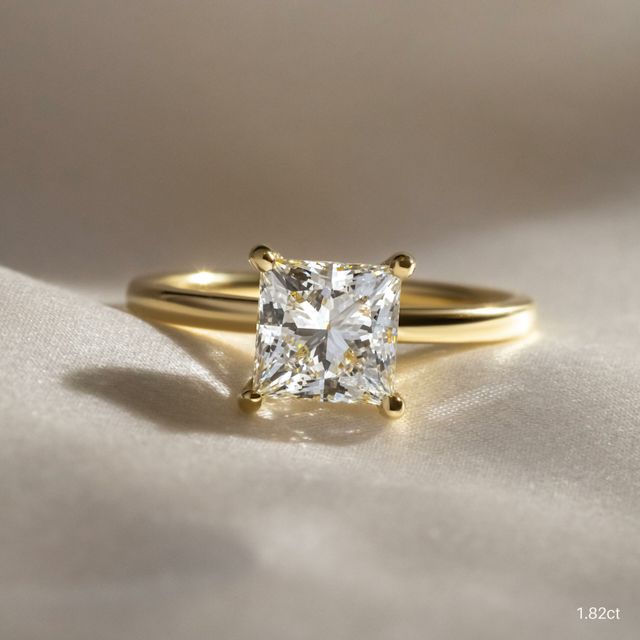
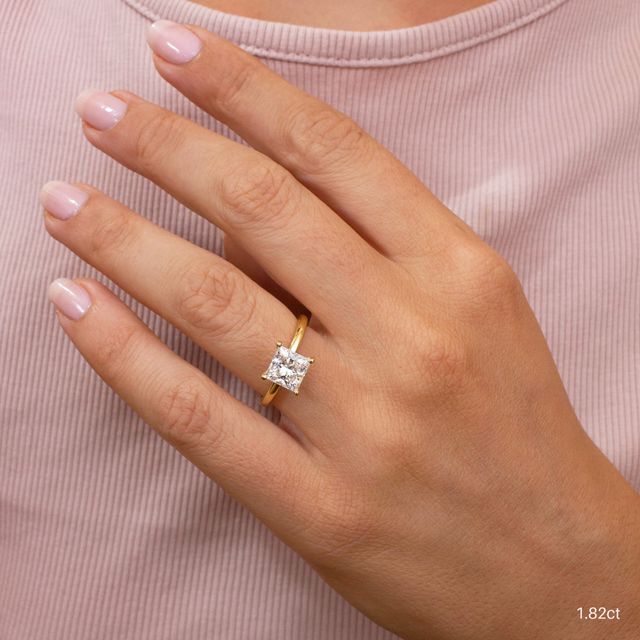
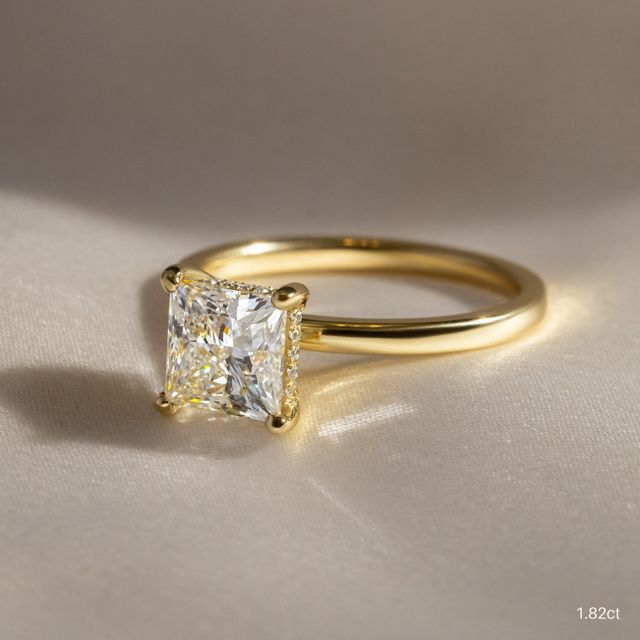
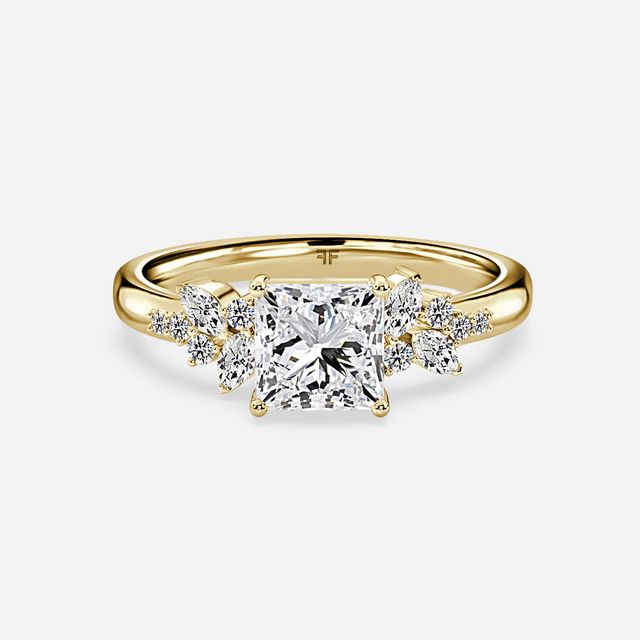
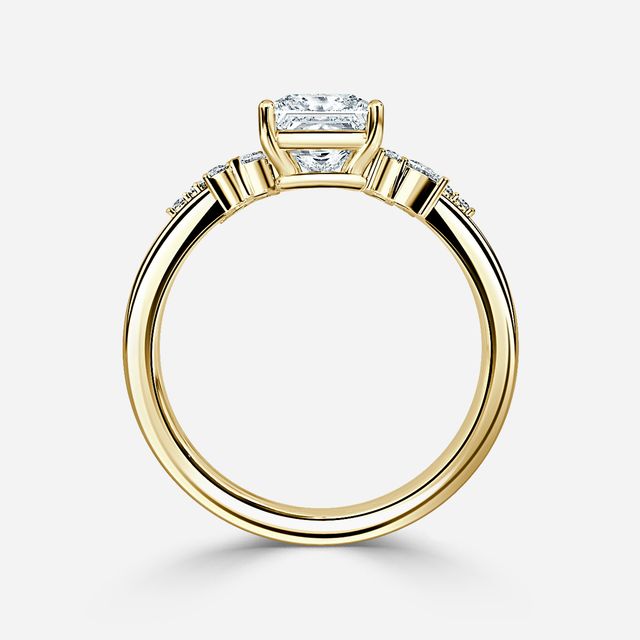
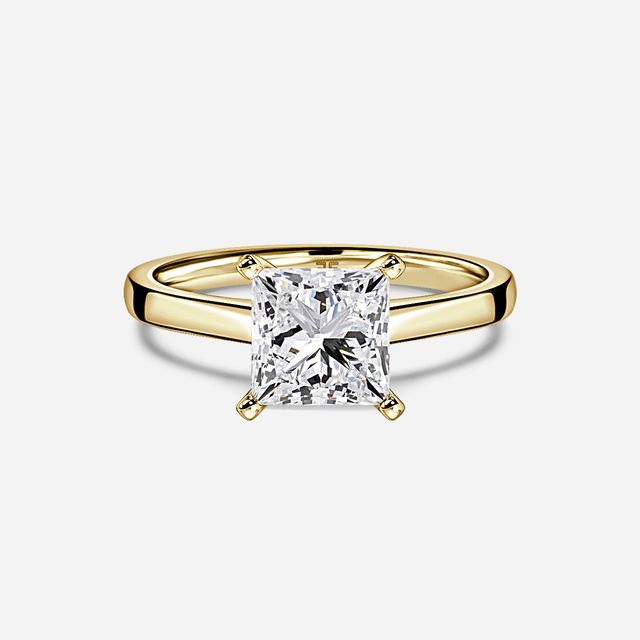
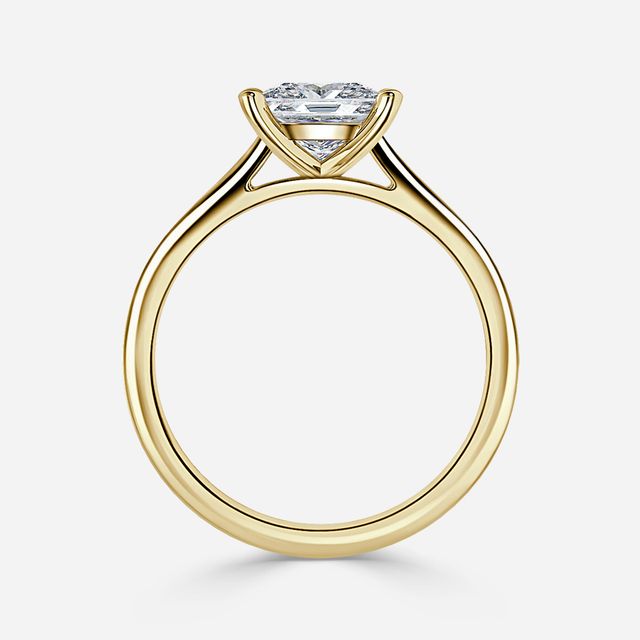
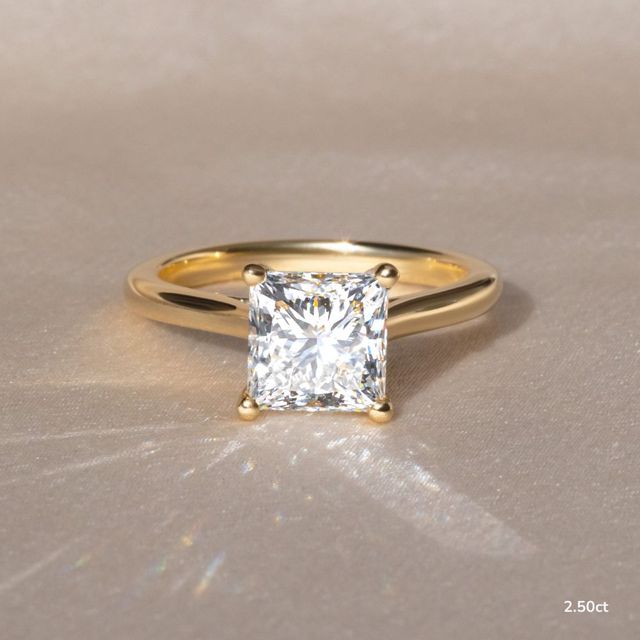
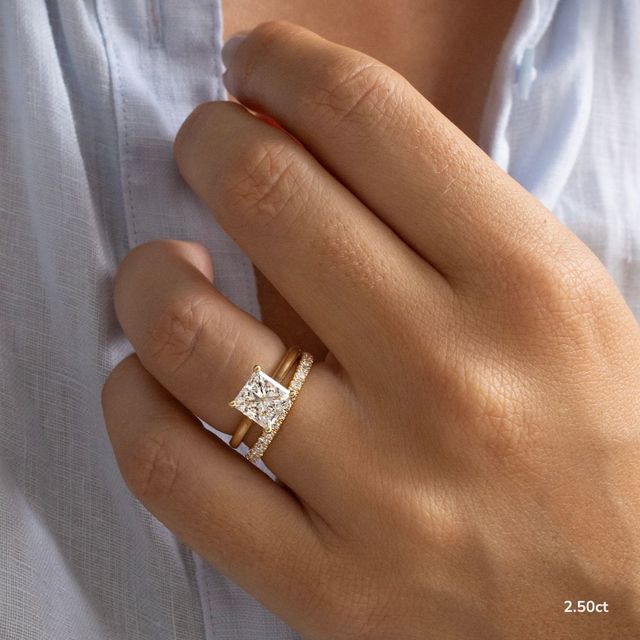

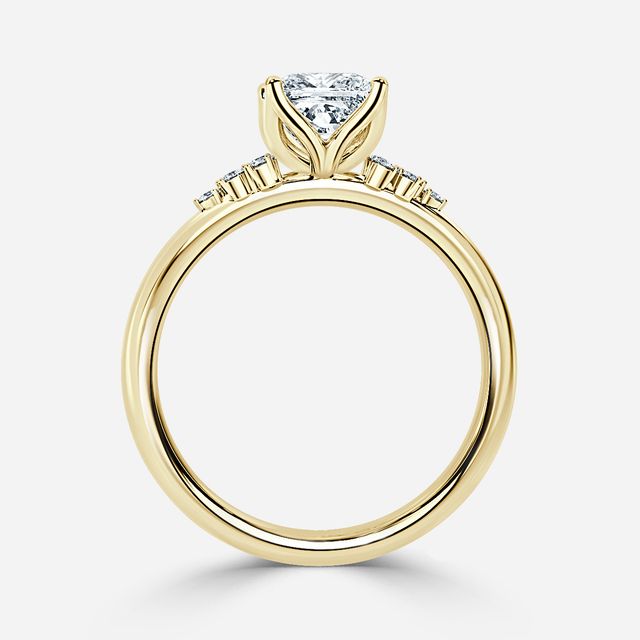
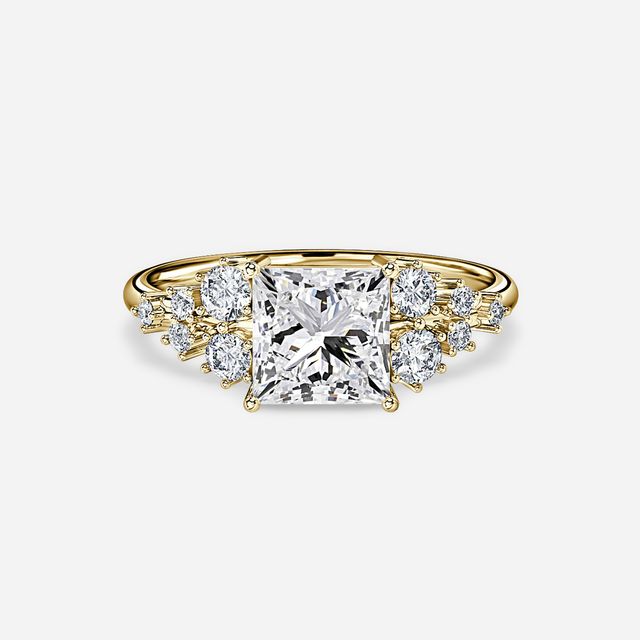
Hand-Select Your Diamond
Get Personal Assistance from Our Specialists
Flawless offers one-on-one support to help you understand every detail of your yellow gold princess cut diamond ring. From evaluating its cut to reviewing clarity and colour, we ensure you have all the information you need to make a choice you’ll love.
How Is a Princess Cut Diamond Designed for Sharp, Square Lines?
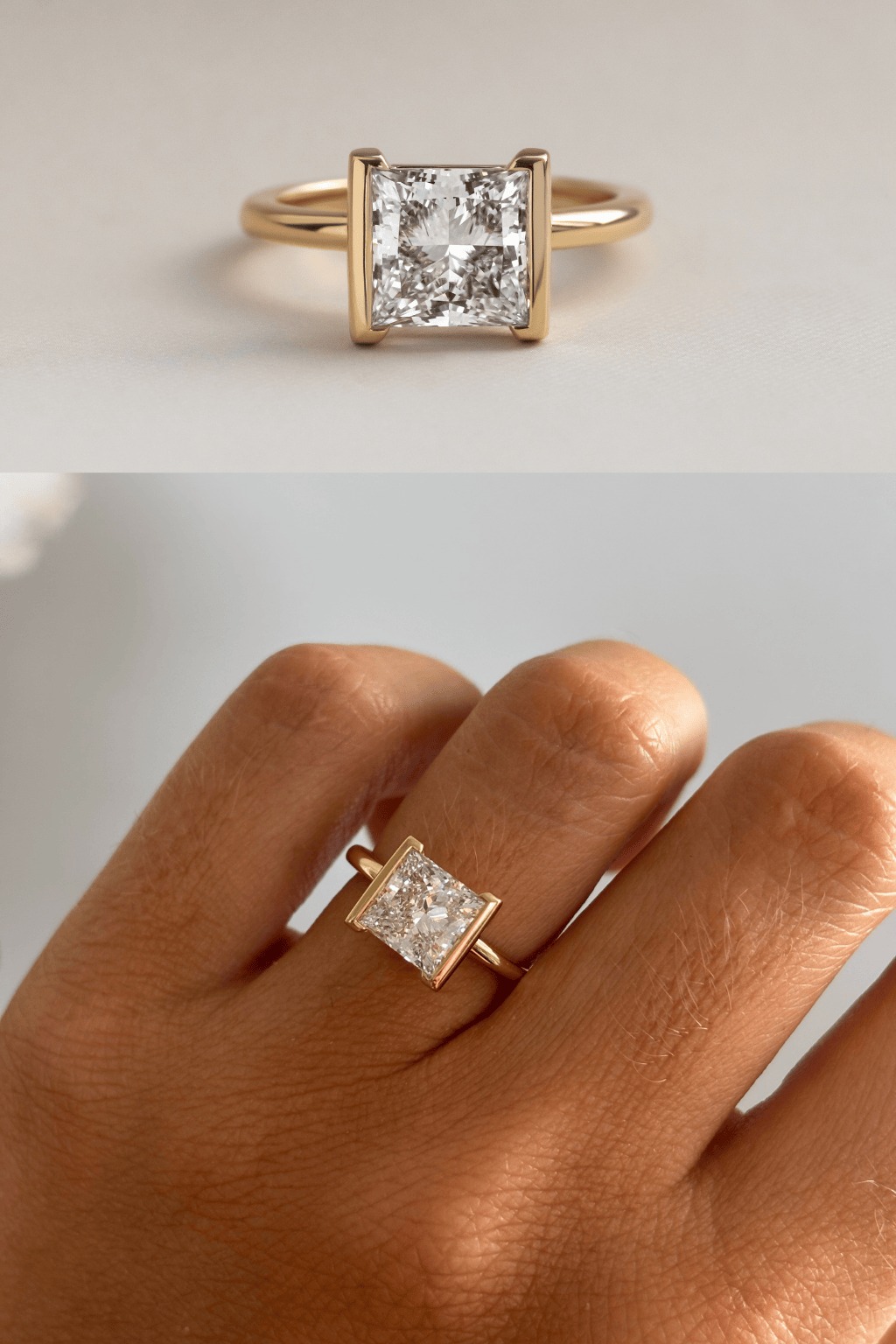
Princess cut yellow gold engagement rings are created by combining precise symmetry and efficient faceting. The cut’s square outline is engineered by cutting four pointed corners with exact 90-degree angles. Beneath the table, the pavilion is divided into multiple chevron patterns, mainly two to four, which allows light to reflect in straight, angular paths that reinforce the sharp, square look. Princess cuts often offer better size-for-cost efficiency than many other shapes because of the brilliant-style facet arrangement
What Should You Look for in Princess Diamond Quality?
When evaluating gold princess engagement rings, focus on cut precision as it directly affects brightness and scintillation. The stone should have a square outline with a length-to-width ratio close to 1.00 and well-protected corners. Natural stones may vary in performance due to yield-focused cutting, while lab-grown options often offer higher colour and clarity. At Flawless Fine Jewellery, you can rely on a curated inventory of thoroughly analysed princess cut engagement rings yellow gold, so you never have to worry about selecting the right stone.
Yellow Gold Princess Cut Engagement Rings- FAQ's
What is the ideal length-to-width ratio for a princess cut diamond?
What is the ideal length-to-width ratio for a princess cut diamond?
For a true square outline, an ideal length-to-width ratio is 1.00-1.03. Ratios above 1.05 start to appear slightly rectangular, which may or may not be preferred depending on personal style.
Which setting styles work best for princess cut diamonds in yellow gold?
Which setting styles work best for princess cut diamonds in yellow gold?
Four-prong, bezel, and halo settings are most common. A V-prong or full bezel provides added protection to the corners, while halo designs can enhance size and brilliance.
What clarity grade is recommended for princess cut diamonds in yellow gold?
What clarity grade is recommended for princess cut diamonds in yellow gold?
Princess cuts hide inclusions better than emerald or Asscher cuts because of their brilliant-style facets. VS2–SI1 is typically a safe range, though higher clarity is ideal for corner inclusions.
Why are princess cuts generally more affordable than rounds?
Why are princess cuts generally more affordable than rounds?
Princess cuts retain more of the rough crystal during cutting, which is often up to 70–80% yield. This is why a princess cut of the same budget often looks larger than a round diamond.

Need help choosing ?
We're happy to help